Mesut Ayata
100 times more frequent deployments: How did we create a high performance team?
#1about 3 minutes
Diagnosing a low-performing team's deployment process
The team faced infrequent deployments, multi-day code freezes, a large monolith, and many manual checks, which created waiting times and a high cost of failure.
#2about 1 minute
Using DORA metrics to define team performance goals
Four key DORA metrics—deployment frequency, lead time for change, change failure rate, and time to restore service—provide a framework for measuring software delivery performance.
#3about 3 minutes
Building a foundation of trust and shared principles
Adopting the Prime Directive, aligning on agile principles, and committing to practices like end-to-end testing and tech huddles creates a unified way of working.
#4about 4 minutes
Adopting trunk-based development and continuous delivery
Shifting to trunk-based development, supported by pair programming and extensive automated testing, enables continuous integration and delivery by eliminating PR wait times.
#5about 2 minutes
Navigating resistance and achieving 100x deployment frequency
Despite initial resistance to changing established workflows, the new practices resulted in over 200 deployments per month and reduced lead time to just 15 minutes.
#6about 1 minute
Focusing on people is key to technical success
The success of a high-performance team depends more on team commitment and continuous knowledge sharing than on individual skills or simply mandating new practices.
#7about 8 minutes
Q&A: Motivating teams for trunk-based development
The discussion covers motivating developers by highlighting the pains of PRs, using pair programming for different seniority levels, and leveraging feature toggles to manage releases.
Related jobs
Jobs that call for the skills explored in this talk.

envelio
Köln, Germany
Remote
Senior
Python
Software Architecture
Matching moments
18:03 MIN
Q&A on Team Topologies, security, and cultural change
Fast Flow, Not Fast Fluff: Embracing an Eclectic DevOps Coaching Approach
05:15 MIN
Applying TDD, CI/CD, DevOps, and SAFe at scale
Agile work at CARIAD – Creating a customer web application for controlling the vehicle
02:48 MIN
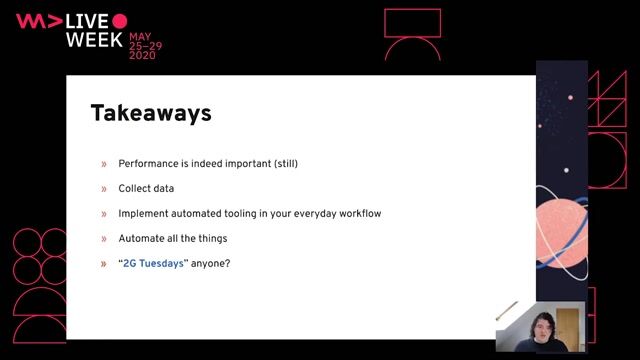
Key takeaways for building a strong performance culture
Frontend Performance Testing in practice
01:18 MIN
Making time for transformation amid constant firefighting
How Cisco embraced a DevOps culture within its network engineering team
02:38 MIN
Measuring elite performance with DORA metrics
Charting the Journey to Continuous Deployment with a Value Stream Map

05:12 MIN
Fostering a modern engineering culture at scale
Inside Mercedes-Benz: How CIO Katrin Lehmann is Empowering 5,000 Developers and Driving Digital Change
03:47 MIN
Empowering teams to solve their own productivity blockers
How Sparking Developer Joy Unlocks Developer Productivity
05:34 MIN
Tracing the evolution of DevOps from silos to superhighways
Navigating the AI Wave in DevOps
Featured Partners
Related Videos
 24:31
24:313 Key Steps for Optimizing DevOps Workflows
Daniel Tao
 25:42
25:42Do you know how fast you were developing?
Markus Walker
 28:30
28:30Empowering Developer Innovation - Balancing Speed, Security, and Scale
Amir Friedman, Martin Reynolds & Yair Etziony
 19:04
19:04Overcoming bottlenecks of Platform Teams
Candost Dagdeviren
 17:56
17:56Metrics Handle with Care: The Paradox of Measuring Team Performance
Stefan Stelzer & Volker Zöpfel
 06:09
06:09Mobile vs. Backend DevOps
Mete Baydar
 20:33
20:33Breaking the Bug Cycle: TDD for the Win
Nadeen Hussein
 31:04
31:04Reducing Cognitive Overload Through Platform Engineering
Llywelyn Griffith-Swain
Related Articles
View all articles


.webp?w=240&auto=compress,format)
From learning to earning
Jobs that call for the skills explored in this talk.


ALPHA-ENGINEERING GmbH & Co. KG
Köln, Germany
DevOps
Ansible
Terraform
Kubernetes
Continuous Integration
trurnit GmbH
München, Germany
PHP
GIT
Bash
Linux
MySQL
+7