Nicolai Parlog
Data-Oriented Programming - Version 1.1
#1about 2 minutes
Introducing the four principles of data-oriented programming
Data-oriented programming (DOP) is a paradigm that models programs as a series of transformations on data, guided by four key principles.
#2about 5 minutes
Modeling a GitHub crawler page type example
An example of a GitHub crawler is used to explore how to model a complex page data type with various states and required operations.
#3about 2 minutes
Using Java records for immutable and transparent data
Java records are the ideal choice for modeling immutable data, and compact constructors can be used to ensure deep immutability for collection fields.
#4about 3 minutes
Modeling data alternatives using sealed interfaces and records
Sealed interfaces create a closed type hierarchy, allowing you to precisely model "either/or" relationships between different record types representing distinct data states.
#5about 3 minutes
How to make illegal data states unrepresentable
By combining a precise type hierarchy with validation in record constructors, you can prevent the creation of invalid object states within your domain model.
#6about 6 minutes
Separating operations from data using pattern matching
Operations are moved out of data records and implemented externally using switch expressions with pattern matching to deconstruct and act on the data.
#7about 4 minutes
Ensuring maintainability with compiler exhaustiveness checks
Switching over sealed types is safe because the compiler enforces exhaustiveness, issuing a compile error if a new subtype is added but not handled.
#8about 3 minutes
Comparing data-oriented programming to the visitor pattern
Data-oriented programming provides a more ergonomic alternative to the classic visitor pattern and is useful for modeling complex return types.
Related jobs
Jobs that call for the skills explored in this talk.


tree-IT GmbH
Bad Neustadt an der Saale, Germany
€54-80K
Intermediate
Senior
Java
TypeScript
+1

Matching moments
03:32 MIN
Applying data-oriented programming principles in Java
Modern Java: This is not your father's Java anymore
01:17 MIN
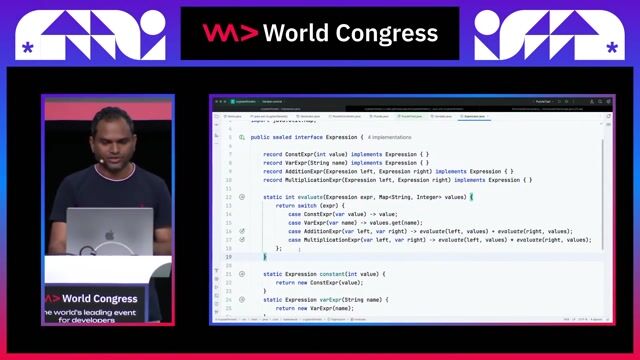
The pattern of data-oriented programming in Java
Algebraic Data Types + Pattern Matching = Elegant and readable Java code
04:10 MIN
The benefits of data-oriented programming over custom types
Java with a Clojure mindset
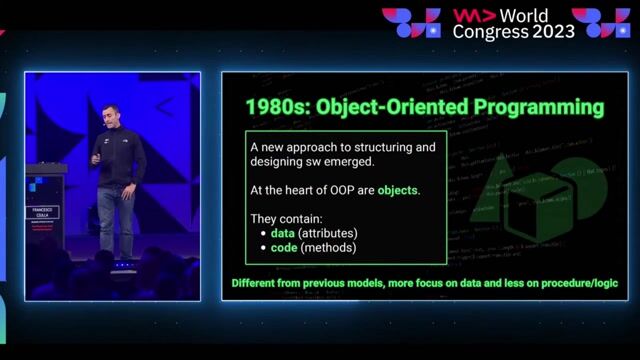
01:51 MIN
The 1980s shift to object-oriented programming
From Punch Cards to AI-assisted Development

03:05 MIN
Defining object-oriented programming principles
OOP revisited
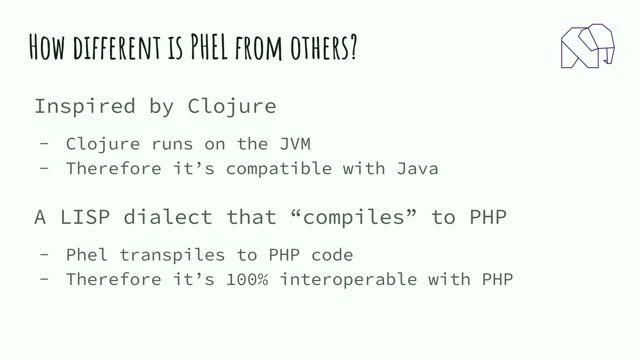
00:31 MIN
Comparing functional and object-oriented paradigms
Phel, a native Lisp for PHP
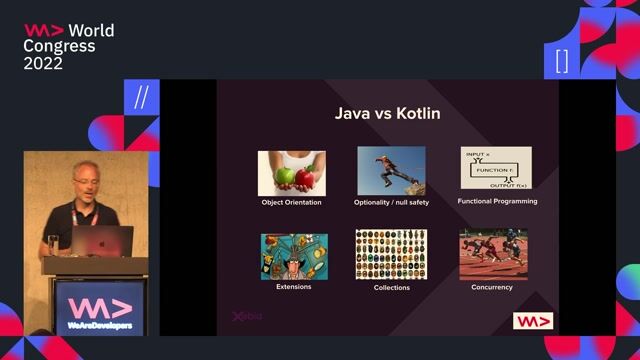
03:57 MIN
Modern object orientation with Kotlin data classes
Moving from Java to Kotlin
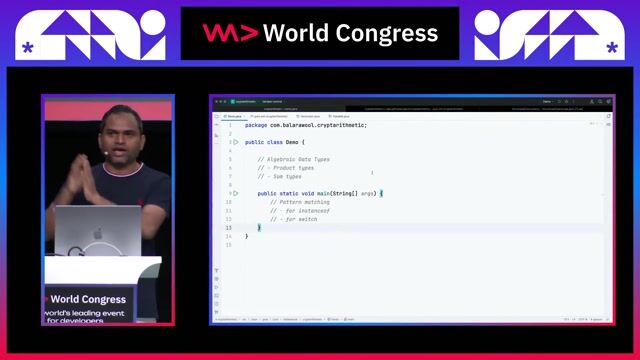
03:45 MIN
Understanding algebraic data types and pattern matching in Java
Algebraic Data Types + Pattern Matching = Elegant and readable Java code
Featured Partners
Related Videos
 29:16
29:16Algebraic Data Types + Pattern Matching = Elegant and readable Java code
Balkrishna Rawool
 48:42
48:42OOP revisited
Dominik Przybysz
 27:49
27:49Modern Java: This is not your father's Java anymore
Ron Veen
 27:39
27:39Modern Java 25
Ron Veen
 58:19
58:19Typed Security: Preventing Vulnerabilities By Design
Michael Koppmann
 30:28
30:28Using Java 17 latest features in real world projects
Ron Veen
 28:13
28:1310 must-know design patterns for JS Devs
Erick Wendel
 28:48
28:48Tackling Complexity With Functional Programming And Kotlin
Georg Dresler
Related Articles
View all articles


.gif?w=240&auto=compress,format)
From learning to earning
Jobs that call for the skills explored in this talk.


IU Internationale Hochschule GmbH
Darmstadt, Germany
Java