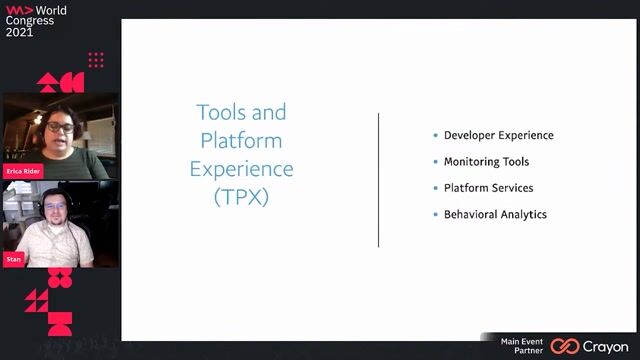
Erica Rider & Stan Carrico
Breaking Down Silos Between Design and Development
#1about 4 minutes
The challenge of scaling design at PayPal
PayPal's internal tools team faced a massive 1-to-300 designer-to-developer ratio, requiring an innovative way to scale design.
#2about 5 minutes
Defining the principles of a quality product experience
A quality product must be discoverable, useful, usable, accessible, trustworthy, valuable, desirable, and measurable to succeed.
#3about 4 minutes
Unifying workflows with the DesignOps 2.0 model
The DesignOps 2.0 model merges traditional design and DevOps principles into a single, unified product development workflow.
#4about 7 minutes
Moving from siloed handoffs to collaborative prototyping
Replacing the traditional "telephone game" of requirements with a collaborative model where teams rapidly iterate on prototypes using shared tools.
#5about 3 minutes
Evolving team responsibilities for a customer-focused mindset
Product teams take ownership of user research and prototyping, while the UX team transitions to a mentorship and platform-building role.
#6about 7 minutes
Using a single component library for design and code
A single React component library is used in both the UXPin prototyping tool and Storybook documentation to eliminate drift between design and development.
#7about 6 minutes
Designing components for developers, designers, and end-users
Components must be designed to serve three distinct users: the developer implementing it, the non-technical prototyper, and the final end-user.
#8about 9 minutes
Building an opinionated platform for federated development
The "console" platform uses an SDK and runtime to allow many teams to develop and deploy independently while enforcing UX consistency.
#9about 4 minutes
Applying the equivalent responsibility principle for UX
The entire product team is responsible for the user experience, which encompasses not just UI but also latency, errors, and system performance.
#10about 4 minutes
Driving accountability with metrics and public reporting
Accountability for UX is enforced through mandatory prototyping, heuristic evaluations, baked-in analytics, and transparent public dashboards.
#11about 2 minutes
Summary of breaking down design and development silos
A recap of the five key principles for scaling design, focusing on customer outcomes, a shared component library, and creating shared responsibility.
Related jobs
Jobs that call for the skills explored in this talk.


Hubert Burda Media
München, Germany
€80-95K
Intermediate
Senior
JavaScript
Node.js
+1
Matching moments
03:26 MIN
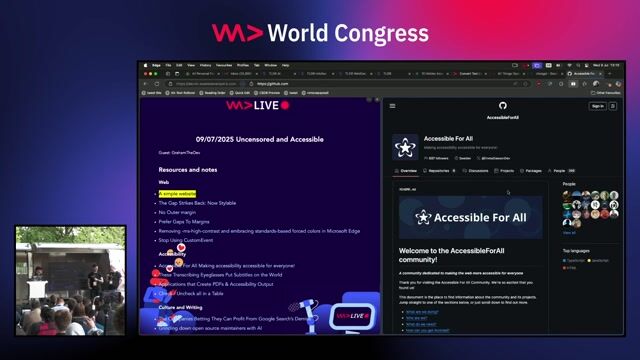
Bridging the gap between designers and developers
WeAreDevelopers LIVE - Is Software Ever Truly Accessible?
03:00 MIN
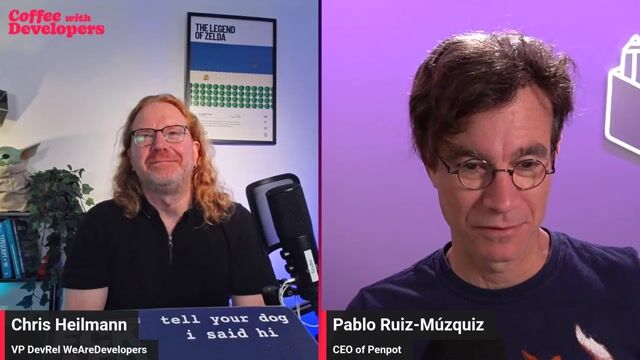
Solving the historic designer and developer collaboration gap
Building Collaborative Open Source tools for Developers and Designers - Pablo Ruiz-Muzquiz from Penpot

05:52 MIN
Q&A on shared systems and scaling productivity
Forget Developer Platforms, Think Developer Productivity!

04:26 MIN
Overcoming collaboration challenges in UI component development
Unlocking Seamless Collaboration: Design-First APIs for UI Components
02:42 MIN
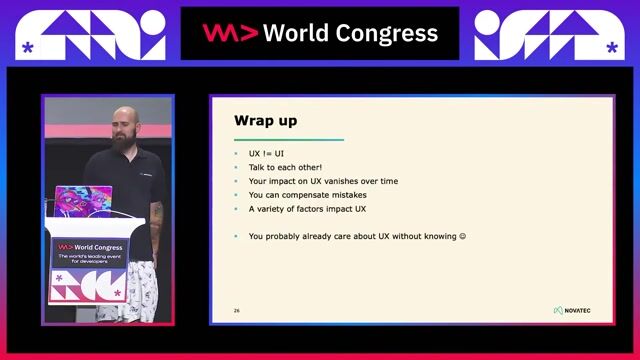
UX is a shared responsibility across the entire team
UX is a fullstack job!
02:46 MIN
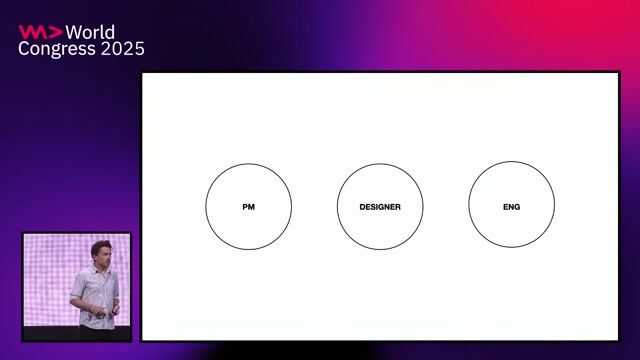
Blurring roles and empowering designers to ship code
The End of Software as we know it

01:44 MIN
Bridging the gap between designers and developers
Fireside Chat with Kris Rasmussen, CTO at Figma
05:14 MIN
Bridging the gap between design and development
Boost Productivity with AI: Figma & Playwright MCP Workflows - Aris Markogiannakis
Featured Partners
Related Videos
 06:16
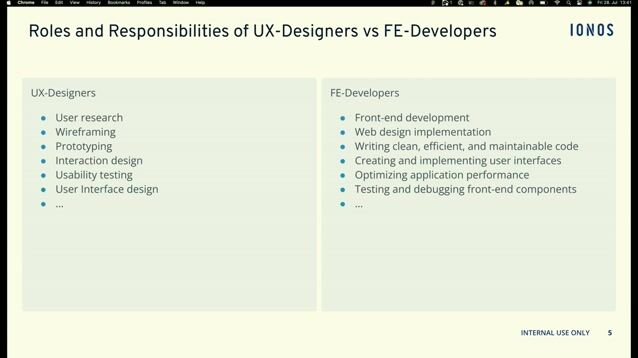
06:16Bridging the Gap
Philipp Kremer
 29:53
29:53Bridging the gap between design and development
Jade Jiang & Noga Mann
 28:35
28:35Unlocking Seamless Collaboration: Design-First APIs for UI Components
Lucien Immink
 13:57
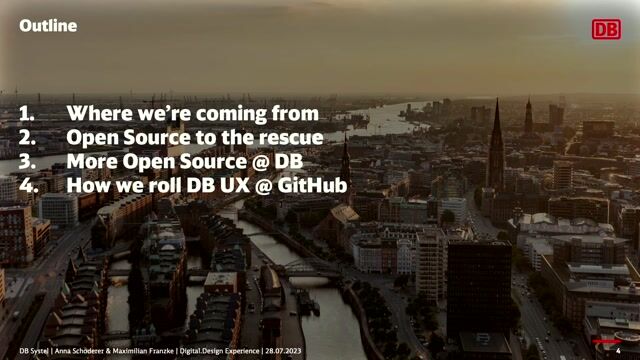
13:57DB UX Design System – How we’ve open sourced our largest inner source project
Anna Schoderer & Maximilian Franzke
 57:45
57:45Forget Developer Platforms, Think Developer Productivity!
Robert Hoffmann & Christian Denich
 26:13
26:13UX in the Dev Cycle: Moving from Handoff to Handshake
Malte Breitzmann & Saskia Henatsch
 20:16
20:16Diving into Developer Experience
Ricky Holtz
 26:51
26:51Building the Right Product and Building It Right: A Glimpse into Extreme Programming, Atomic Design
Rita Castro
Related Articles
View all articles



From learning to earning
Jobs that call for the skills explored in this talk.


&why GmbH
Berlin, Germany
€50-70K
Junior
Intermediate
Senior
React
Next.js
TypeScript


PiNCAMP GmbH
Berlin, Germany
Senior
React
GraphQL
Next.js


Marc O'Polo SE
Stephanskirchen, Germany
A/B testing
Data analysis
Google Analytics
rpc - The Retail Performance Company
Municipality of Madrid, Spain
Figma
Adobe Photoshop
Adobe Illustrator
Adobe Premiere Pro
Adobe After Effects