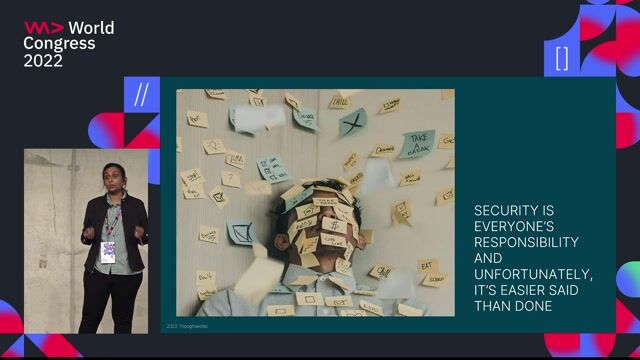
Nazneen Rupawalla
Organizational Change Through The Power Of Why - DevSecOps Enablement
#1about 3 minutes
Why traditional security engagement creates bottlenecks
Security teams become a bottleneck when accountability is misplaced and feedback is provided too late in the development cycle.
#2about 1 minute
Creating a center of excellence for security
A center of excellence was established to make security planning scalable, measurable, and easier for teams to adopt.
#3about 3 minutes
Integrating security into existing team workflows
A security champion program and mapping controls into project management tools like Trello helps embed security into daily work.
#4about 4 minutes
Structuring security controls with the power of why
Each security control is framed with a 'why' to provide business context and a 'how' with actionable steps and tools.
#5about 3 minutes
Automating security tooling within the SDLC
Security tools for SAST, runtime security, and cloud misconfigurations are integrated into the CI/CD pipeline as acceptance criteria for controls.
#6about 2 minutes
Visualizing security progress with data-driven dashboards
Data from Trello boards is automatically collected via webhooks to create dashboards that track team progress on security controls.
#7about 3 minutes
Creating a security maturity model for leadership
Team-level data is aggregated into a high-level security maturity model to give leadership visibility and drive accountability.
#8about 1 minute
Building an effective security champion program
Nominating champions through tech leads, rather than relying on volunteers, increases the program's impact and motivation.
#9about 1 minute
Key takeaways for building a security culture
Explaining the 'why' behind security empowers teams to take ownership, while relationship building and automation are key to cultural change.
#10about 3 minutes
Q&A on program implementation and threat modeling
The discussion covers the program's 1.5-year implementation timeline, managing high-impact risks, and doing threat modeling every iteration.
Related jobs
Jobs that call for the skills explored in this talk.


envelio
Köln, Germany
Remote
Senior
Python
Software Architecture

zeb consulting
Frankfurt am Main, Germany
Remote
Junior
Intermediate
Senior
Amazon Web Services (AWS)
Cloud Architecture
+1
Matching moments
02:54 MIN
Why security teams must scale through developer collaboration
Building Security Champions
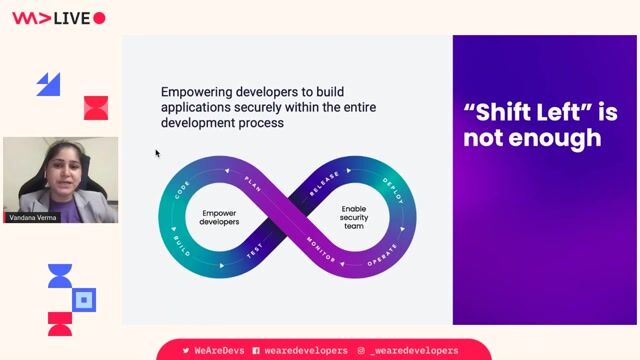
08:08 MIN
How to shift left with a security champions program
Stranger Danger: Your Java Attack Surface Just Got Bigger
03:08 MIN
Shifting security left with collaborative threat modeling
We adopted DevOps and are Cloud-native, Now What?

02:20 MIN
Why security is a shared responsibility for every role
What The Hack is Web App Sec?
01:17 MIN
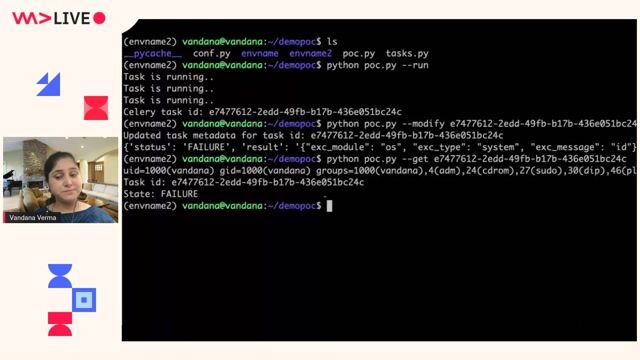
Fostering a developer-first security culture
Walking into the era of Supply Chain Risks

05:31 MIN
From vulnerability researcher to automated security founder
The transformative impact of GenAI for software development and its implications for cybersecurity
03:15 MIN
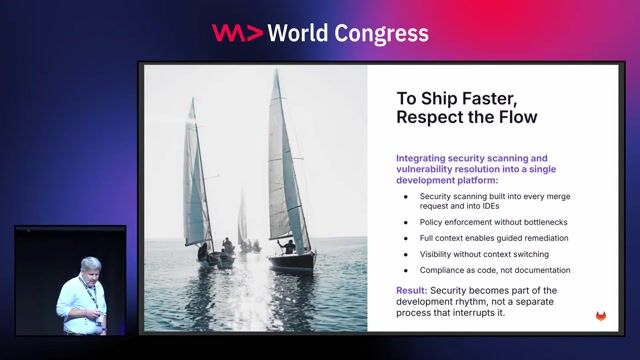
Scaling AppSec teams by empowering developers
Why Security-First Development Helps You Ship Better Software Faster

03:26 MIN
The cultural shift from DevOps to DevSecOps
You can’t hack what you can’t see
Featured Partners
Related Videos
 16:00
16:00DevSecOps culture
Ali Yazdani
 42:40
42:40Building Security Champions
Tanya Janca
 32:55
32:55Open Source Secure Software Supply Chain in action
Natale Vinto
 41:51
41:51Why shifting left is so important for software developers
Jemiah Sius
 34:46
34:46We adopted DevOps and are Cloud-native, Now What?
Bruno Amaro Almeida
 45:08
45:08DevSecOps: Injecting Security into Mobile CI/CD Pipelines
Moataz Nabil
 48:02
48:02Building Security Champions
Tanya Janca
 23:34
23:34Secure Code Superstars: Empowering Developers and Surpassing Security Challenges Together
Stefania Chaplin
Related Articles
View all articles

.gif?w=240&auto=compress,format)

From learning to earning
Jobs that call for the skills explored in this talk.


Accenture
Municipality of Madrid, Spain
API
C++
GIT
Java
.NET
+25
NTT Data Deutschland SE
München, Germany
Java
DevOps
Python
Node.js
Continuous Integration
Descripción De La Vacante
€50-70K
Continuous Delivery
Continuous Integration
Amazon Web Services (AWS)
Infrastructure as Code (IaC)
NTT Data Deutschland SE
Erfurt, Germany
Remote
Java
Python
Node.js
Continuous Integration
Securiton Ag
CHF166-208K