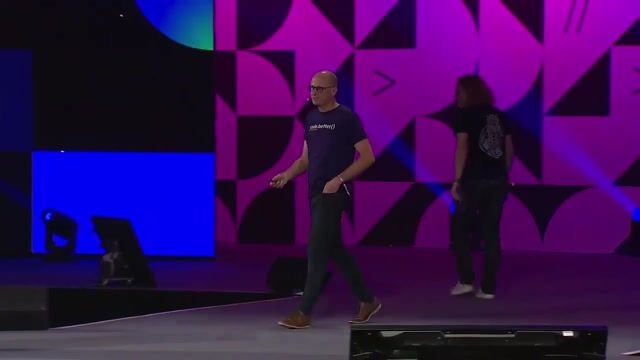
Olivier Gaudin
The Clean as You Code Imperative
#1about 2 minutes
Understanding code as the foundational asset of software
Software is built on code, which acts like the roots of a tree, dictating its behavior, performance, and long-term health.
#2about 4 minutes
Exploring the four essential pillars of clean code
Clean code is defined by four key attributes: consistency for team collaboration, intentionality to avoid bugs, adaptability for future changes, and responsibility to prevent bad practices.
#3about 3 minutes
How clean code increases development velocity and ownership
Unclean code leads to rework and disposable code, while clean code increases team throughput, enables innovation, and fosters a sense of ownership.
#4about 3 minutes
Why knowing your code quality metrics is not enough
Simply measuring code quality metrics like code coverage often fails to drive improvement because it focuses on the entire existing codebase, which is an overwhelming problem to solve.
#5about 5 minutes
Adopting the "Clean as You Code" methodology
The "Clean as You Code" approach fixes the "water leak" by focusing on ensuring that all new and changed code meets a high-quality standard via a quality gate.
#6about 1 minute
How "Clean as You Code" organically improves legacy code
By focusing on new and modified code, this methodology naturally cleans up the legacy codebase over time as developers touch about 20% of the code annually.
#7about 2 minutes
Integrating code quality checks into the development lifecycle
The "Clean as You Code" practice is integrated throughout the development process, starting in the IDE and continuing through pull requests and CI/CD pipelines.
#8about 2 minutes
A summary of the clean code imperative
The presentation concludes that clean code creates a better work environment and that the "Clean as You Code" approach is the simplest way to achieve it without adding extra steps.
#9about 7 minutes
Q&A on Sonar, AI in code analysis, and pricing
The Q&A session addresses questions about architectural concepts like DDD, the use of AI in analysis, Sonar's pricing model, and strategies for shifting quality checks earlier in the development cycle.
Related jobs
Jobs that call for the skills explored in this talk.

envelio
Köln, Germany
Remote
Senior
Python
Software Architecture

Matching moments
02:11 MIN
Building a sustainable culture of clean code
Breaking the Bug Cycle: TDD for the Win

06:16 MIN
Why code-centric development becomes fragile and hard to maintain
The Power of Prompting with AI Native Development - Simon Maple
02:23 MIN
Key strategies for building a secure code culture
Secure Code Superstars: Empowering Developers and Surpassing Security Challenges Together
01:42 MIN
Moving beyond the dogma of clean code
Intentional Code - Minimalism in a World of Dogmatic Design
01:57 MIN
How AI makes managing technical debt an organizational necessity
Your Code as a Crime Scene
02:29 MIN
Three core challenges in modern software development
Kalo: From Code Chaos to One-Click Polyglot Codegen
02:34 MIN
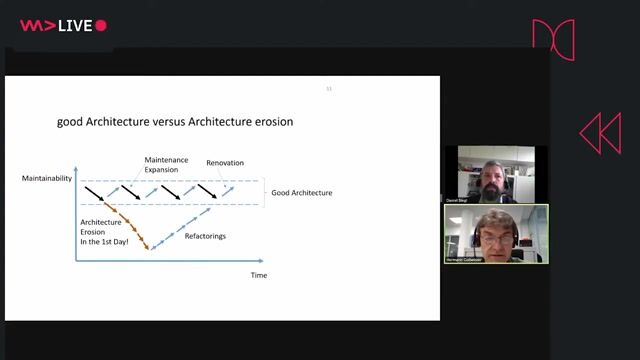
Addressing the challenge of growing software complexity
Model Based Systems Engineering in an Agile Product Development Process
03:57 MIN
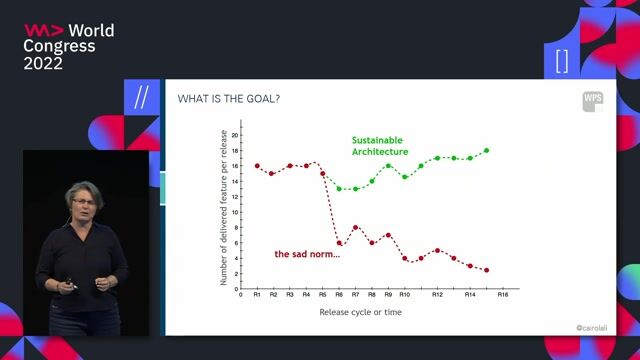
Achieving sustainable software architecture for long-term productivity
It’s all about the domain, honey ! Experiences from 15 years of Domain-Driven Design
Featured Partners
Related Videos
 35:31
35:31How we will build the software of tomorrow
Thomas Dohmke
 36:53
36:53From Punch Cards to AI-assisted Development
Francesco Ciulla
 09:23
09:2311 Tips for Greener Code
Kent Simonsen
 26:46
26:46Keep your code refactorable
Gerrit Stapper
 31:01
31:01Everything as Code: A Dozen As-Code Concepts beyond Infrastructure or Configuration as Code
Jose Javier Alonso Moya
 30:23
30:23Grappling With Clunky Old Software? Start by Understanding What’s Inside!
Luc Perard
 26:52
26:52The Road to One Billion Developers
Thomas Dohmke & Demetris Cheatham
 41:06
41:06From Monolith Tinkering to Modern Software Development
Lars Gentsch
Related Articles
View all articles


From learning to earning
Jobs that call for the skills explored in this talk.


RIDCHA DATA
Canton de Saint-Herblain-1, France
Senior
API
GIT
Java
React
DevOps
+7
École Coda
Canton of Orléans-1, France
€9-21K
API
Java
Azure
DevOps
+6
Datadog
Paris, France
Senior
Go
Java
Python
Data analysis
Machine Learning