Paul Graham
Accelerating Python on GPUs
#1about 1 minute
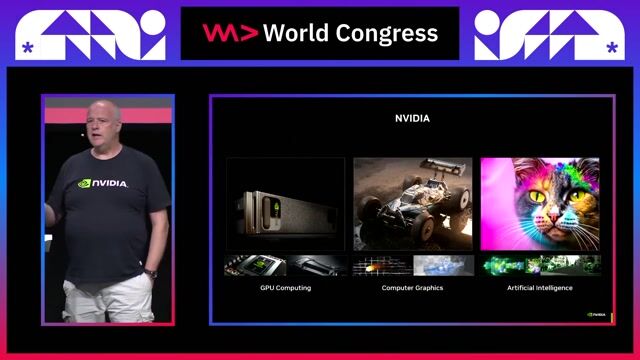
The evolution of GPUs from graphics to AI computing
GPUs transitioned from rendering graphics to becoming essential for general-purpose parallel computing and accelerating the deep learning revolution.
#2about 2 minutes
Why GPU acceleration surpasses traditional CPU performance
The plateauing of single-core CPU performance contrasts with the continued exponential growth of GPU parallel processing power, driving the adoption of accelerated computing.
#3about 2 minutes
Understanding the CUDA software ecosystem stack
The CUDA platform provides a layered ecosystem, allowing developers to use high-level applications, libraries, or program GPUs directly depending on their needs.
#4about 3 minutes
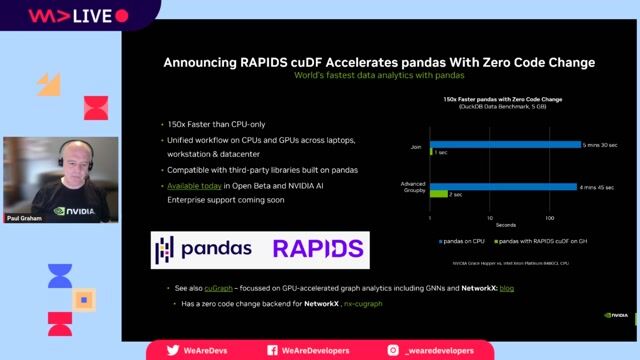
Using high-level frameworks like RAPIDS for data science
Frameworks like RAPIDS provide GPU-accelerated, API-compatible replacements for popular data science libraries like Pandas and Scikit-learn, often requiring no code changes.
#5about 2 minutes
Accelerating deep learning with cuDNN and Cutlass
The cuDNN library provides optimized deep learning primitives for frameworks like PyTorch, while Cutlass offers direct programming access to Tensor Cores for custom operations.
#6about 2 minutes
A spectrum of approaches for programming GPUs in Python
Developers can choose from a spectrum of GPU programming approaches in Python, ranging from simple drop-in libraries to directive-based compilers and direct API control.
#7about 2 minutes
Drop-in libraries like CuPy and cuNumeric for easy acceleration
Libraries like CuPy and cuNumeric offer NumPy-compatible APIs that enable GPU acceleration and multi-node scaling with just a single import statement change.
#8about 3 minutes
Gaining more control with the Numba JIT compiler
Numba acts as a just-in-time compiler that translates Python functions into optimized GPU code using simple decorators for either automatic vectorization or explicit kernel writing.
#9about 1 minute
Achieving maximum flexibility with PyCUDA and C kernels
PyCUDA provides the lowest-level access to the GPU from Python, allowing developers to write and execute raw CUDA C kernels for complete control over hardware features.
#10about 2 minutes
Profiling and debugging GPU-accelerated Python code
NVIDIA provides a full suite of Python-enabled developer tools for performance analysis, including Insight Systems for system-level profiling and Insight Compute for kernel-level optimization.
#11about 2 minutes
Accessing software, models, and training resources
NVIDIA offers extensive resources including the NGC catalog for containerized software, pre-trained models, and the Deep Learning Institute for self-paced training courses.
Related jobs
Jobs that call for the skills explored in this talk.


Matching moments
01:07 MIN
The evolution of GPU programming with Python
Accelerating Python on GPUs

05:12 MIN
Boosting Python performance with the Nvidia CUDA ecosystem
The weekly developer show: Boosting Python with CUDA, CSS Updates & Navigating New Tech Stacks
10:18 MIN
A progressive approach to programming GPUs in Python
Accelerating Python on GPUs
02:47 MIN
Understanding accelerated computing and GPU parallelism
WWC24 - Ankit Patel - Unlocking the Future Breakthrough Application Performance and Capabilities with NVIDIA
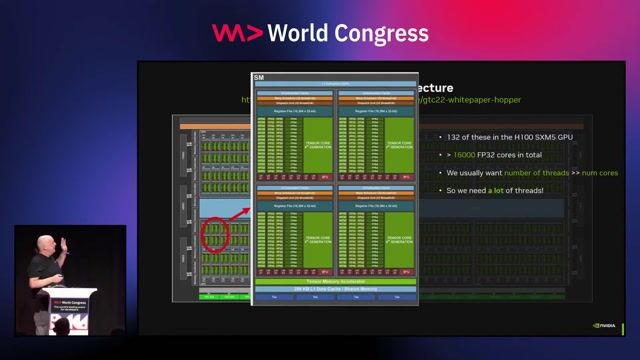
02:28 MIN
Navigating the CUDA Python software ecosystem
Accelerating Python on GPUs
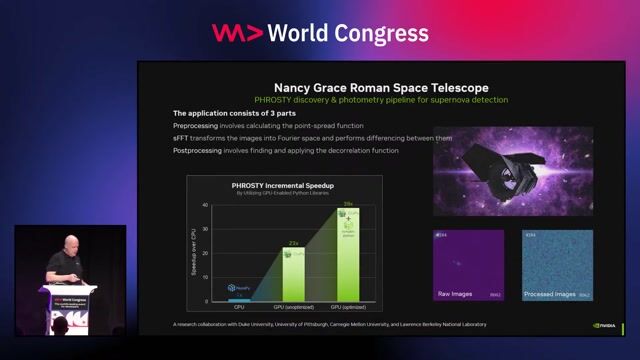
01:33 MIN
A look at upcoming Python GPU programming tools
Accelerating Python on GPUs
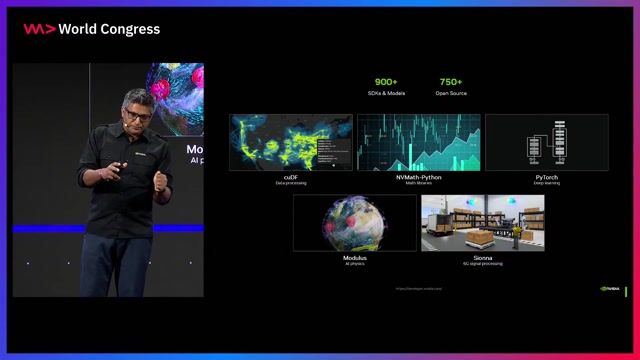
04:05 MIN
Using NVIDIA libraries to easily accelerate applications
WWC24 - Ankit Patel - Unlocking the Future Breakthrough Application Performance and Capabilities with NVIDIA
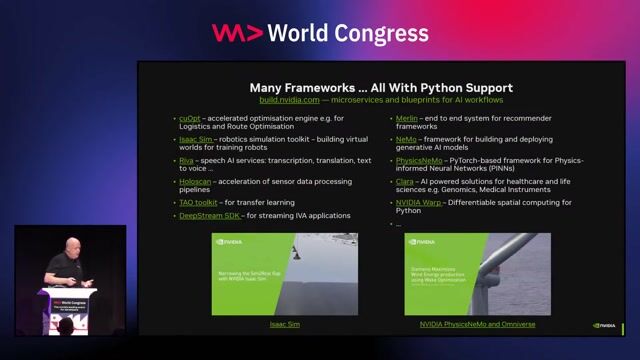
02:56 MIN
Using high-level frameworks like Rapids for acceleration
Accelerating Python on GPUs
Featured Partners
Related Videos
 24:39
24:39Accelerating Python on GPUs
Paul Graham
 59:43
59:43Accelerating Python on GPUs
Paul Graham
 21:02
21:02CUDA in Python
Andy Terrel
 22:07
22:07WWC24 - Ankit Patel - Unlocking the Future Breakthrough Application Performance and Capabilities with NVIDIA
Ankit Patel
 29:52
29:52Your Next AI Needs 10,000 GPUs. Now What?
Anshul Jindal & Martin Piercy
 37:32
37:32Coffee with Developers - Stephen Jones - NVIDIA
Stephen Jones
 25:29
25:29Python: Behind the Scenes
Diana Gastrin
 32:19
32:19A Deep Dive on How To Leverage the NVIDIA GB200 for Ultra-Fast Training and Inference on Kubernetes
Kevin Klues
Related Articles
View all articles


From learning to earning
Jobs that call for the skills explored in this talk.


Avantgarde Experts GmbH
München, Germany
Junior
C++
GIT
CMake
Linux
DevOps
+3
Nvidia
Central Milton Keynes, United Kingdom
£221K
Senior
C++
Python
Docker
Ansible
+4
Corriculo Ltd
Manchester, United Kingdom
Remote
£40-60K
GIT
Linux
NumPy
+8
NVIDIA
Zwolle, Netherlands
Senior
Linux
DevOps
Python
OpenCL
Docker