Gerrit Grunwald
Trash Talk - Exploring the memory management in the JVM
#1about 2 minutes
Why JVM memory management and structure matter
Understanding the JVM's automatic memory management and its structure, including the stack and heap, is crucial for application performance and responsiveness.
#2about 1 minute
How objects become garbage through reachability
An object becomes garbage and eligible for collection only when it is no longer reachable from any stack frame, including references held within other collections.
#3about 5 minutes
Understanding stop-the-world pauses and non-moving collectors
Garbage collection often requires stop-the-world pauses, and basic non-moving collectors like Mark and Sweep can lead to heap fragmentation over time.
#4about 7 minutes
Solving fragmentation with moving and generational collectors
Moving collectors like Mark-Compact and Copy, along with generational collection strategies, combat heap fragmentation and optimize for short-lived objects.
#5about 5 minutes
A tour of classic JVM garbage collectors
An overview of classic collectors including the single-threaded Serial, multi-threaded Parallel (throughput), and the now-deprecated Concurrent Mark Sweep (CMS).
#6about 3 minutes
Understanding the modern G1 garbage-first collector
The G1 collector is the default in modern JVMs, using a region-based approach to provide predictable pause times by focusing on areas with the most garbage.
#7about 3 minutes
Exploring low-latency and specialized collectors
Specialized collectors like Epsilon (no-op), Shenandoah, and ZGC are designed for specific use cases like ultra-low latency or massive heaps, often at the cost of throughput.
#8about 2 minutes
How ZGC achieves concurrency with colored pointers
Fully concurrent collectors like ZGC use techniques such as colored pointers and loaded value barriers to move objects and update references without long stop-the-world pauses.
#9about 1 minute
How to choose the right garbage collector
Selecting a garbage collector involves balancing the trade-offs between application throughput, latency from pause times, and overall resource consumption.
Related jobs
Jobs that call for the skills explored in this talk.


Wilken GmbH
Ulm, Germany
Intermediate
Java
Maven
+1

IGEL Technology GmbH
Bremen, Germany
Senior
Java
IT Security
Matching moments
01:08 MIN
Improving garbage collection with Generational Shenandoah
Modern Java 25

05:30 MIN
Q&A on garbage collection performance and common pitfalls
Pointers? In My Python? It's More Likely Than You Think
02:51 MIN
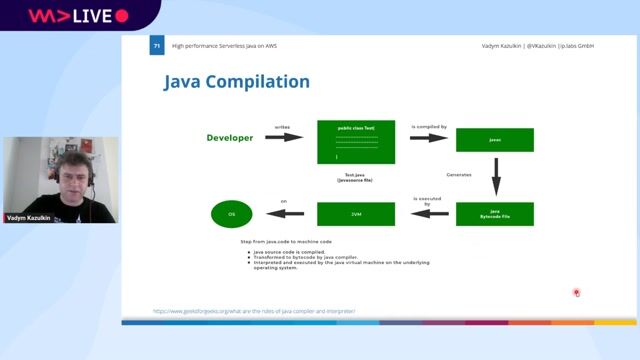
Tuning JVM compilation and garbage collection
High performance Serverless Java on AWS
06:38 MIN
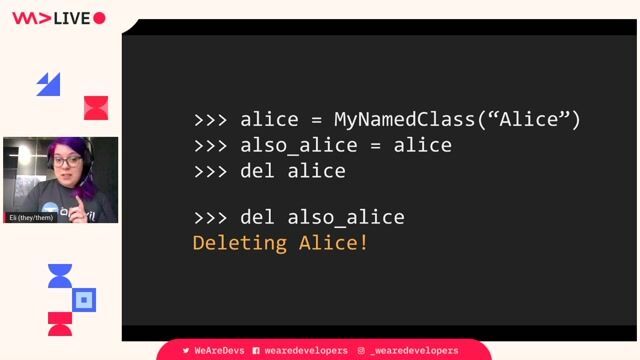
Using the garbage collector for cyclic references
Pointers? In My Python? It's More Likely Than You Think
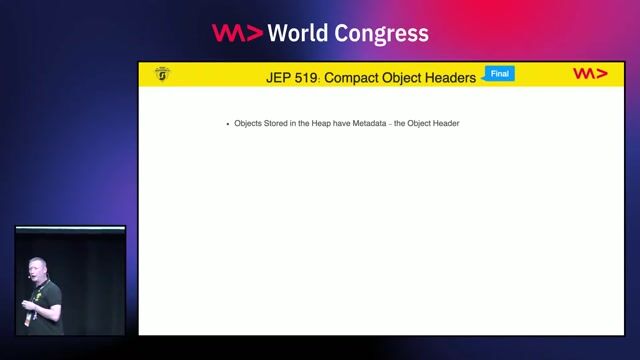
00:59 MIN
Reducing memory usage with compact object headers
Modern Java 25
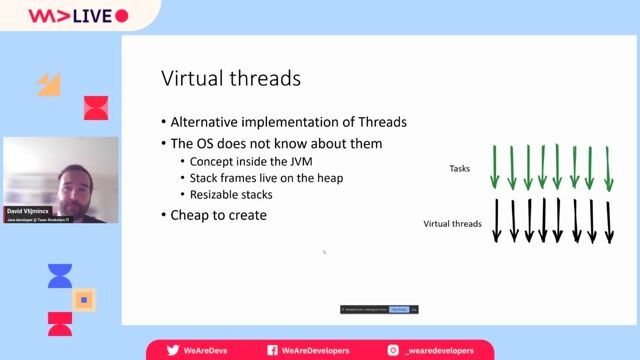
01:57 MIN
Introducing lightweight virtual threads in Java 21
Introduction and pitfalls of Java's new concurrency model
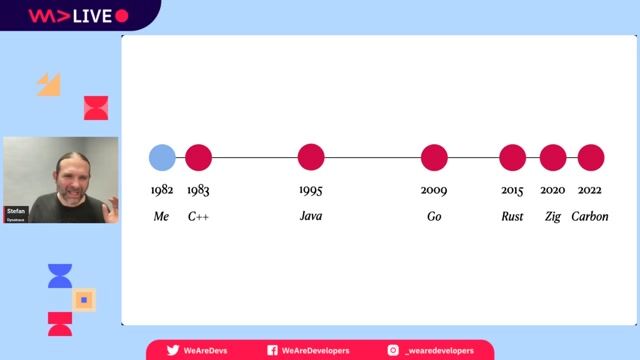
03:44 MIN
How Java and Go emerged to address C++ limitations
Eternal Sunshine of the Spotless Programming Language

03:18 MIN
Exploring the future of WebAssembly memory and debugging
WeAreDevelopers LIVE – From JavaScript to WebAssembly, High-Performance Charting and More
Featured Partners
Related Videos
 27:39
27:39Modern Java 25
Ron Veen
 27:49
27:49Modern Java: This is not your father's Java anymore
Ron Veen
 00:18
00:18Guided Memory Management: Rust's Ownership Model
Stefan Baumgartner
 39:56
39:56Turbocharged: Writing High-Performance C# and .NET Code
Steve Gordon
 30:36
30:36In-Memory Computing - The Big Picture
Markus Kett
 26:54
26:54High performance Serverless Java on AWS
Vadym Kazulkin
 24:13
24:13C++ Features You Might Not Know
Jonathan Müller
 28:07
28:07An (In-)Complete Guide to C++ Object Lifetimes
Jonathan Müller
Related Articles
View all articles



From learning to earning
Jobs that call for the skills explored in this talk.


Grafton Deutschland GmbH
Düsseldorf, Germany
GIT
Java
REST
JUnit
React
+3
FERCHAU GmbH
Neubeuern, Germany
Remote
€70-85K
Intermediate
API
Java
Docker
+5
FERCHAU GmbH
Rosenheim, Germany
Intermediate
API
Java
Docker
Angular
Kubernetes
+3
KJR Software Services Ltd
Reading, United Kingdom
Junior
Java
NoSQL
Kafka
DevOps
Docker
+10
Grafton Deutschland GmbH
Frankfurt am Main, Germany
Java
React
GFR Technologies SE
Municipality of Madrid, Spain
Remote
Senior
Java
Kafka
DevOps
Oracle
+6