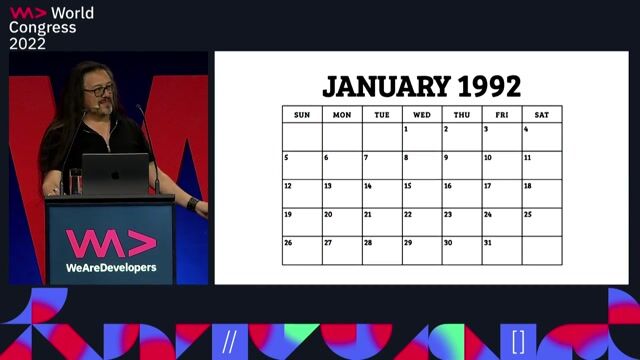
John Romero
Wolfenstein 3D Postmortem
#1about 1 minute
The state of id Software before Wolfenstein 3D
In late 1991, id Software had just shipped five Commander Keen games in six months and was working with 16-color EGA graphics and early Sound Blaster audio.
#2about 2 minutes
Pivoting from Commander Keen to a new 3D game
Facing burnout after multiple Commander Keen titles, the team decided to create a new 3D game, with Romero suggesting a modern remake of the 1981 classic Castle Wolfenstein.
#3about 2 minutes
Starting development and switching from EGA to VGA
The project began using the 16-color EGA engine from Catacomb 3D, but a crucial suggestion from publisher Scott Miller prompted a switch to 256-color VGA for a cleaner look.
#4about 1 minute
Creating the engine and adapting the Ted 5 level editor
John Carmack built the VGA renderer using a 2D matrix for level data, which allowed the team to adapt their existing 2D editor, Ted 5, for creating 3D levels.
#5about 3 minutes
Discovering the core fun in high-speed action
Initial plans to replicate the original game's stealth mechanics were scrapped after playtesting revealed that fast-paced running and gunning was the most enjoyable part of the experience.
#6about 5 minutes
Turning down a $2.5 million acquisition from Sierra
After a promising visit to Sierra Online, the team received a $2.5 million stock acquisition offer from Ken Williams but the deal fell through when he rejected their counteroffer for $100,000 in cash.
#7about 2 minutes
Using sound zones to create dynamic enemy alerts
To avoid activating all enemies at once, the team implemented "sound zones" using floor tile data, allowing gunfire to alert only enemies in connected areas and creating suspense.
#8about 4 minutes
Expanding the team and moving from Wisconsin to Dallas
After hiring artist Kevin Cloud, the team made a spontaneous late-night decision to abandon their new Madison leases and relocate the entire company to Dallas, Texas.
#9about 3 minutes
Adding secret areas and acquiring the Wolfenstein trademark
To add mystery, the team convinced a reluctant John Carmack to implement "push walls" for secret areas, while new hire Jay Wilber successfully located and purchased the Wolfenstein trademark for $5,000.
#10about 2 minutes
Recording the memorable music and voice effects
Composer Bobby Prince flew in and set up a studio in the office to create the game's music and record all the iconic enemy voice effects, which were performed by the development team.
#11about 2 minutes
Devising a novel shareware and upselling strategy
Publisher Scott Miller proposed releasing the first episode as shareware to take pre-orders and created a brilliant pricing model that incentivized players to buy a six-episode bundle with a hint book.
#12about 3 minutes
Building the installer and shipping the game
After creating a fake "PC-13" rating screen, Romero had to quickly code a custom multi-disk installer, leading to the game's official shareware release at 4 AM on May 5, 1992.
#13about 3 minutes
Finishing the full game and inventing speedrunning
The team crunched to finish the remaining 50 levels after the shareware's massive success and inadvertently created the concept of speedrunning by publishing their fastest level times in the hint manual.
#14about 1 minute
Q&A on Unreal Engine and Doom sound effects
Romero shares his admiration for Unreal Engine and reveals that the iconic Cacodemon death sound from Doom originated from a commercial sound effects library.
#15about 5 minutes
Q&A on rapid development and work-life balance
Romero explains their fast QA process was based on highly iterative coding and testing from their 80s assembly days, and confirms that they worked nearly all waking hours during development.
#16about 2 minutes
Q&A on the philosophy of piracy and open source
Romero discusses their approach to piracy, which was to ignore it and never use copy protection, instead focusing on fostering a community by releasing game source code early.
Related jobs
Jobs that call for the skills explored in this talk.


IGEL Technology GmbH
Bremen, Germany
Senior
C++
Powershell
Matching moments
04:19 MIN
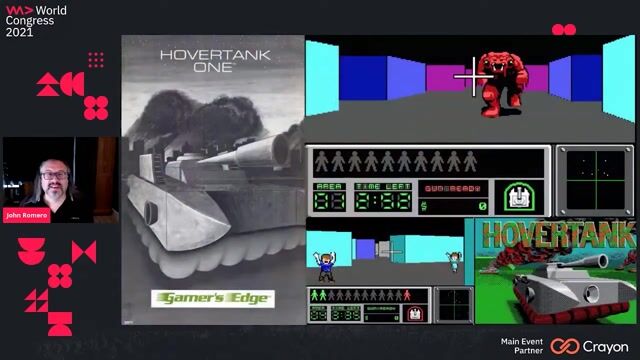
Pioneering the first-person shooter with Wolfenstein 3D
A Lifetime in Games: The Past, Present and Future of the Industry
03:21 MIN
The origins of Doom and early 3D game development
30 Years of Rip and Tear: Doom’s development story
03:35 MIN
The origins of Doom and the rise of LAN parties
Live doom II deathmatch with John Romero
01:26 MIN
Pushing boundaries with Quake and leaving id Software
A Lifetime in Games: The Past, Present and Future of the Industry
04:35 MIN
Q&A on current projects and game development
Live doom II deathmatch with John Romero
02:21 MIN
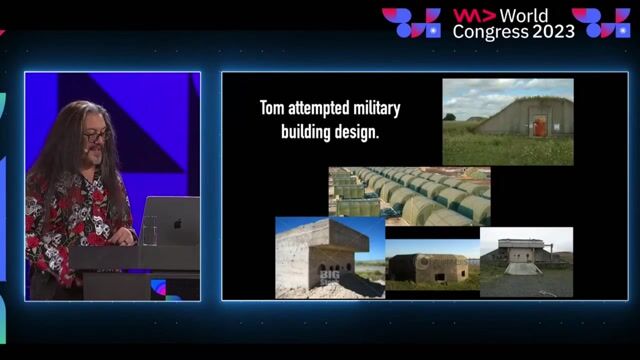
Overcoming level design limitations from Wolfenstein 3D
30 Years of Rip and Tear: Doom’s development story
05:16 MIN
Q&A on modern game releases and industry advice
A Lifetime in Games: The Past, Present and Future of the Industry
12:52 MIN
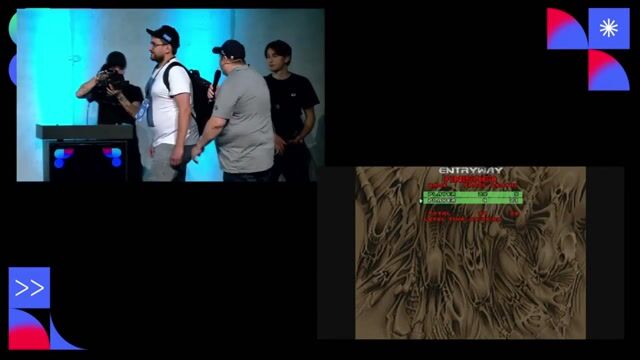
Level design insights on the Underhalls map
Live doom II deathmatch with John Romero
Featured Partners
Related Videos
 29:37
29:3730 Years of Rip and Tear: Doom’s development story
John Romero
 1:10:16
Live doom II deathmatch with John Romero
John Romero
 47:36
47:36A Lifetime in Games: The Past, Present and Future of the Industry
John Romero
 30:53
30:53How to Survive The Worst Launch of Your Career with Brenda Romero
Brenda Romero
 33:09
33:09Fireside Chat with Warren Spector & John Romero
John Romero, Christian Heilmann & Warren Spector
 28:28
28:28We are all part of the game
Johanna Pirker
 46:42
46:42Closing Keynote by Joel Spolsky
Joel Spolsky
 30:03
30:03The Billion Dollar Machine: First Time Right.
Dr. Andreas Kaldun
Related Articles
View all articles



From learning to earning
Jobs that call for the skills explored in this talk.


&why GmbH
Berlin, Germany
€50-70K
Junior
Intermediate
Senior
React
Next.js
TypeScript
![Lead 3D Programmer [Beyond Good And Evil 2]](https://wearedevelopers.imgix.net/public/default-job-listing-cover.png?w=400&ar=3.55&fit=crop&crop=entropy&auto=compress,format)

Responsibilitiesdesign
Remote
Lua
Agile Methodologies
Continuous Integration