Jan Weinschenker
Side-by-Side: Reactive vs non-reactive Java
#1about 6 minutes
Understanding the core principles of the reactive manifesto
Reactive systems are designed to be responsive, elastic, and resilient by using a message-driven architecture.
#2about 2 minutes
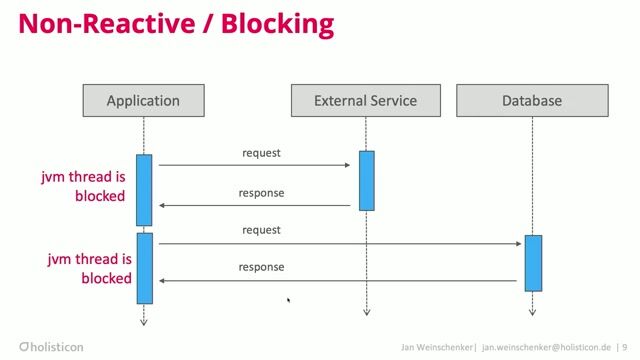
Visualizing blocking vs non-blocking request models
Sequence diagrams illustrate how non-blocking, fire-and-forget requests improve resource utilization compared to traditional blocking calls.
#3about 3 minutes
An analogy for reactive task distribution
A story about cleaning rooms illustrates how reactive programming breaks large workloads into small, independent tasks for efficient parallel execution.
#4about 2 minutes
Exploring reactive Java frameworks and adoption challenges
Despite numerous frameworks like WebFlux and RxJava, reactive programming faces a steep learning curve and debugging complexities.
#5about 3 minutes
Live code demonstration of imperative Java
A walkthrough of a standard, non-reactive Java method shows a straightforward, blocking approach to fetching and processing API data.
#6about 3 minutes
Live code demonstration of reactive Java
The same API data fetching task is implemented using a reactive, stream-based approach with Spring WebFlux and Project Reactor's Flux.
#7about 3 minutes
Understanding the unique reactive debugging experience
Debugging reactive code reveals its declarative nature, where execution is non-linear and only begins after a subscription is made.
#8about 3 minutes
Q&A on Project Loom and integration challenges
The discussion covers whether Project Loom makes reactive programming obsolete and how to handle integration with non-reactive components like JDBC.
Related jobs
Jobs that call for the skills explored in this talk.

tree-IT GmbH
Bad Neustadt an der Saale, Germany
€54-80K
Intermediate
Senior
Java
TypeScript
+1


Matching moments
01:19 MIN
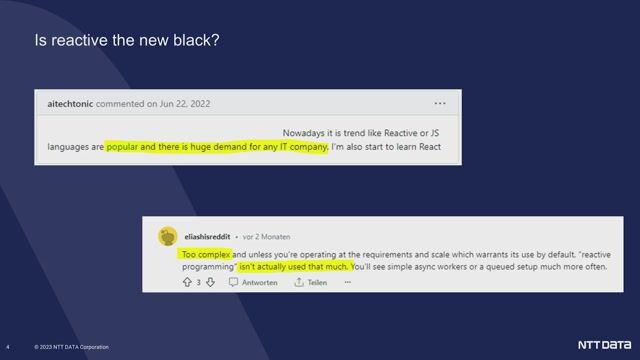
Examining the trend and debate around reactive programming
Is reactive the new black? Imperative vs. reactive programming with Quarkus
02:47 MIN
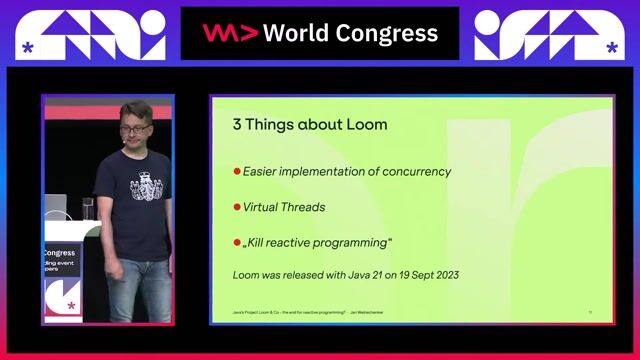
The core principles of reactive programming
Java's Project Loom & Co - the end for reactive programming?
02:51 MIN
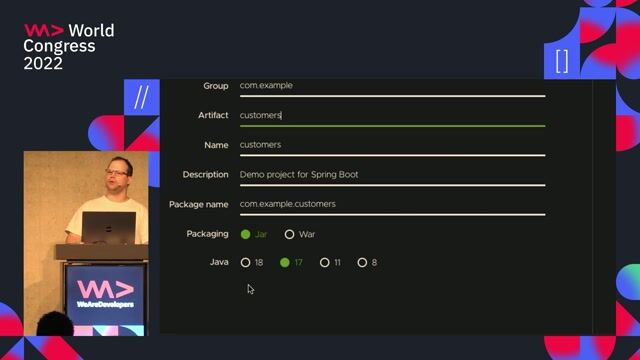
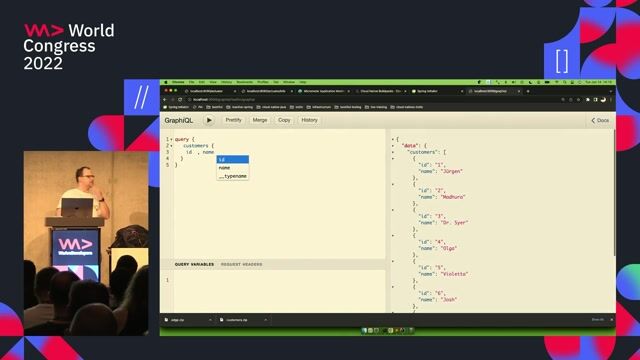
Building a reactive service with Spring Data
Kubernetes Native Java
01:12 MIN
Comparing Project Loom with reactive programming
Kubernetes Native Java

04:11 MIN
Comparing reactive and imperative code performance
Development of reactive applications with Quarkus
01:53 MIN
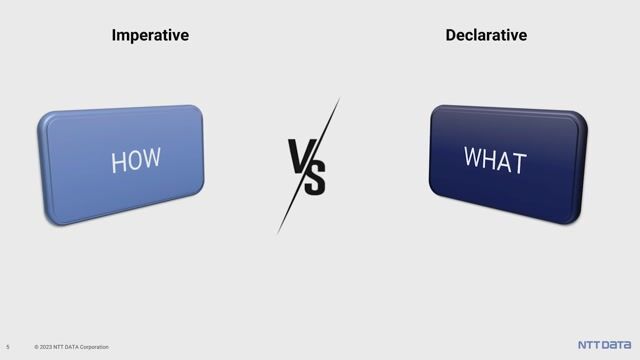
Contrasting imperative, declarative, and reactive code styles
Is reactive the new black? Imperative vs. reactive programming with Quarkus

09:05 MIN
Q&A on virtual threads, reactive programming, and Java 21
Introduction and pitfalls of Java's new concurrency model
02:06 MIN
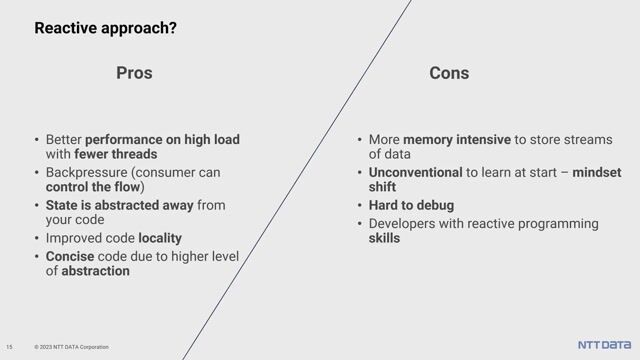
Evaluating the advantages and disadvantages of reactive code
Is reactive the new black? Imperative vs. reactive programming with Quarkus
Featured Partners
Related Videos
 54:18
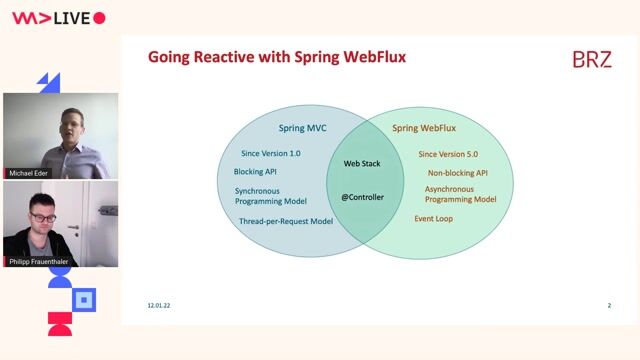
54:18Going reactive with Spring WebFlux
Michael Eder & Philipp Frauenthaler
 39:10
39:10Development of reactive applications with Quarkus
Niklas Heidloff
 52:24
52:24Slip Through the Boundaries of Legacy Systems with Kotlin and Spring WebFlux
Lukas Georgieff & Alberto Gisbert
 55:30
55:30Java 21: The Revolution of Virtual Threads - A Deep Dive
Christian Woerz
 41:37
41:37Java with a Clojure mindset
Dan Lebrero
 27:49
27:49Modern Java: This is not your father's Java anymore
Ron Veen
 52:51
52:51Introduction and pitfalls of Java's new concurrency model
David Vlijmincx
 37:55
37:552021: Familiar APIs on Kickass Runtimes #slideless
Adam Bien
Related Articles
View all articles


.gif?w=240&auto=compress,format)
From learning to earning
Jobs that call for the skills explored in this talk.


&why GmbH
Berlin, Germany
€50-70K
Junior
Intermediate
Senior
React
Next.js
TypeScript


Adaptive Financial Consulting
Barcelona, Spain
CSS
HTML
RxJS
React
JavaScript
+1
CodeCamp:N GmbH
Nürnberg, Germany
Intermediate
Azure
React
Spring
Angular
Project Management
+1
Adept Resourcing
Bradford, United Kingdom
Java
REST
React
Docker
PostgreSQL
+2