Michael Eder & Philipp Frauenthaler
Going reactive with Spring WebFlux
#1about 2 minutes
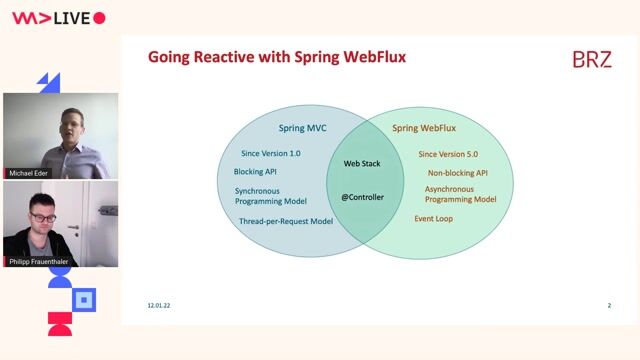
Comparing Spring MVC and Spring WebFlux models
Spring MVC uses a blocking, thread-per-request model, while Spring WebFlux uses a non-blocking, asynchronous event loop model for better resource utilization.
#2about 3 minutes
A restaurant analogy for blocking vs non-blocking I/O
An analogy of waiters in a restaurant illustrates how the non-blocking model of Spring WebFlux is more efficient than the blocking, thread-per-request model of Spring MVC.
#3about 3 minutes
How the event loop model improves resource utilization
Spring WebFlux uses a small number of event loop threads that handle requests in a non-blocking fashion, preventing threads from waiting idly on I/O operations.
#4about 4 minutes
Core concepts of Project Reactor: Publisher and Subscriber
Project Reactor is built on the Publisher-Subscriber pattern, using Mono for single items and Flux for streams, which only emit data upon subscription.
#5about 7 minutes
Building a reactive API controller with Spring WebFlux
Implementing a reactive controller involves wrapping request and response types in Mono or Flux and using a functional, chained programming style with operators like flatMap.
#6about 5 minutes
Handling blocking I/O and transactions in reactive streams
Calling blocking database operations from a reactive stream blocks the event loop, requiring the use of `subscribeOn` to offload work and breaking standard `@Transactional` behavior.
#7about 6 minutes
Implementing manual transaction management in WebFlux
Transactions in a hybrid reactive application require manual management using `PlatformTransactionManager` and a dedicated single-threaded scheduler to maintain thread context across operations.
#8about 5 minutes
Exploring reactive data access and messaging options
To fully leverage WebFlux, the data access layer must also be reactive, using technologies like R2DBC, Hibernate Reactive, or native reactive drivers for NoSQL databases.
#9about 8 minutes
Lessons from a hybrid reactive and blocking architecture
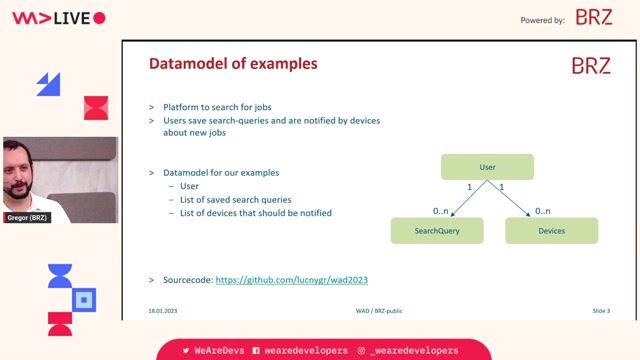
A real-world job platform demonstrates a hybrid model, highlighting the complexity of mixing blocking and non-blocking code and reinforcing that a fully reactive stack is ideal.
#10about 11 minutes
Q&A: Thread safety, RxJava vs Reactor, and debugging
The Q&A session addresses common concerns, including the importance of thread safety, the similarities between RxJava and Reactor, and the inherent difficulties of debugging asynchronous code.
Related jobs
Jobs that call for the skills explored in this talk.

tree-IT GmbH
Bad Neustadt an der Saale, Germany
€54-80K
Intermediate
Senior
Java
TypeScript
+1


Matching moments
04:33 MIN
Moving from blocking to non-blocking with Spring WebFlux
Back(end) to the Future: Embracing the continuous Evolution of Infrastructure and Code
02:13 MIN
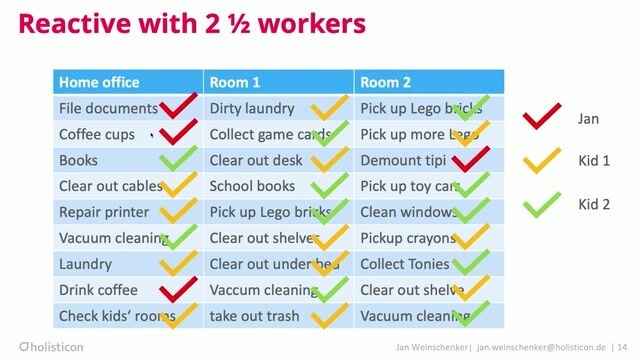
Exploring reactive Java frameworks and adoption challenges
Side-by-Side: Reactive vs non-reactive Java
03:26 MIN
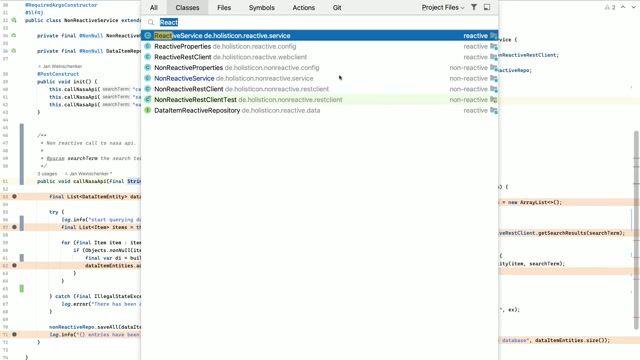
Live code demonstration of reactive Java
Side-by-Side: Reactive vs non-reactive Java
05:10 MIN
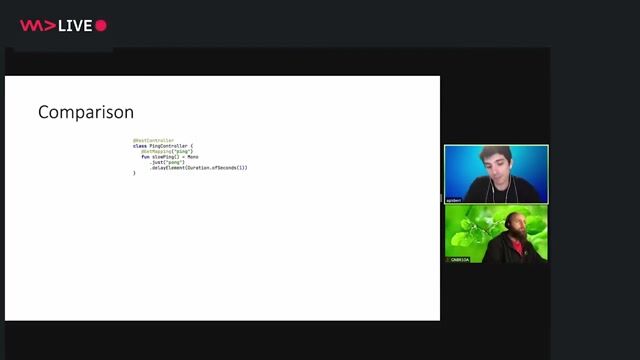
Comparing WebFlux and MVC performance under memory constraints
Slip Through the Boundaries of Legacy Systems with Kotlin and Spring WebFlux

09:05 MIN
Q&A on virtual threads, reactive programming, and Java 21
Introduction and pitfalls of Java's new concurrency model
02:51 MIN
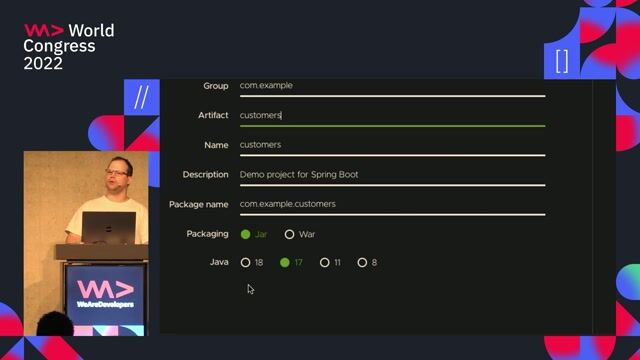
Building a reactive service with Spring Data
Kubernetes Native Java
03:47 MIN
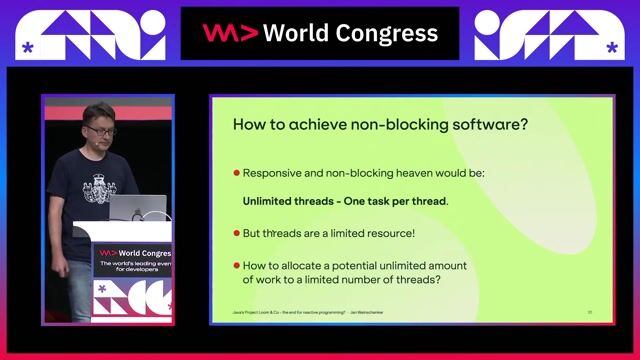
Exploring approaches to non-blocking software development
Java's Project Loom & Co - the end for reactive programming?
02:29 MIN
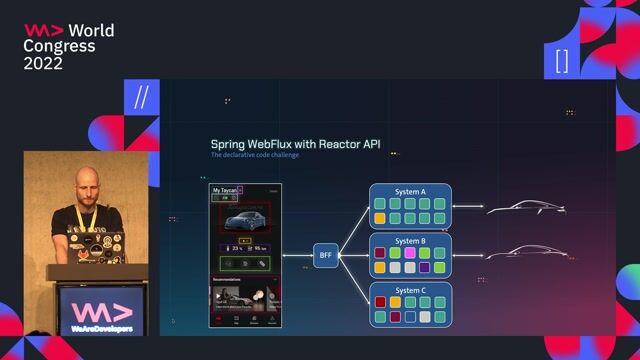
Using Kotlin Coroutines to simplify complex reactive code
Back(end) to the Future: Embracing the continuous Evolution of Infrastructure and Code
Featured Partners
Related Videos
 52:24
52:24Slip Through the Boundaries of Legacy Systems with Kotlin and Spring WebFlux
Lukas Georgieff & Alberto Gisbert
 25:41
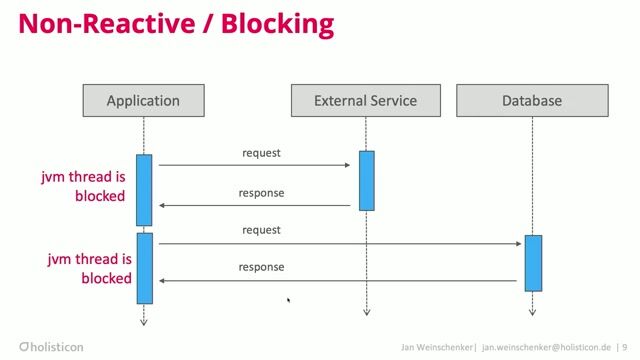
25:41Side-by-Side: Reactive vs non-reactive Java
Jan Weinschenker
 58:05
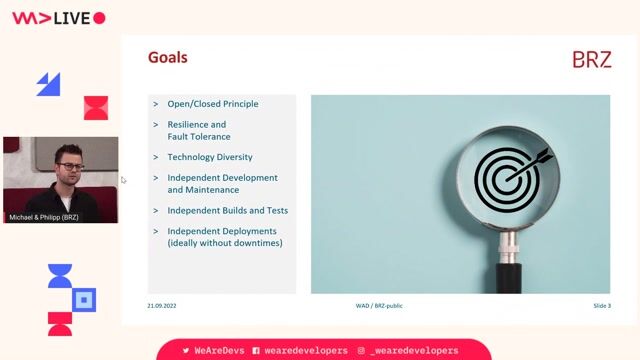
58:05Our journey with Spring Boot in a microservice architecture
Michael Eder & Philipp Frauenthaler
 39:10
39:10Development of reactive applications with Quarkus
Niklas Heidloff
 55:30
55:30Java 21: The Revolution of Virtual Threads - A Deep Dive
Christian Woerz
 49:30
49:30Microservices with Micronaut
Moritz Kammerer
 54:30
54:30Hibernate: How to keep calm
Philipp Frauenthaler & Gregor Lucny
 57:38
57:38Are you done yet? Mastering long-running processes in modern architectures
Bernd Ruecker
Related Articles
View all articles
.gif?w=240&auto=compress,format)


From learning to earning
Jobs that call for the skills explored in this talk.


&why GmbH
Berlin, Germany
€50-70K
Junior
Intermediate
Senior
React
Next.js
TypeScript


CodeCamp:N GmbH
Nürnberg, Germany
Intermediate
Azure
React
Spring
Angular
Project Management
+1
Hier Ihre Firma Anmelden
Berlin, Germany
Remote
Java
REST
Vue.js
Docker
+6
0nlu
Lucerne, Switzerland
Java
Scrum
DevOps
Docker
Angular
+1
Hornbach-Baumarkt AG
Zweibrücken-Land, Germany
Remote
Go
API
Java
Dart
+17
Digital Talent Agency
Municipality of Madrid, Spain
Remote
Intermediate
Java
Conflux
Utrecht, Netherlands
Remote
Senior
React
DevOps
Next.js
Cypress
+3
Santander Bank, N. A.
Málaga, Spain
Senior
CSS
HTML
Java
React
Spring
+7
Michael Page International (Deutschland) GmbH
Frankfurt am Main, Germany
Remote
GIT
React
DevOps
Powershell
+3