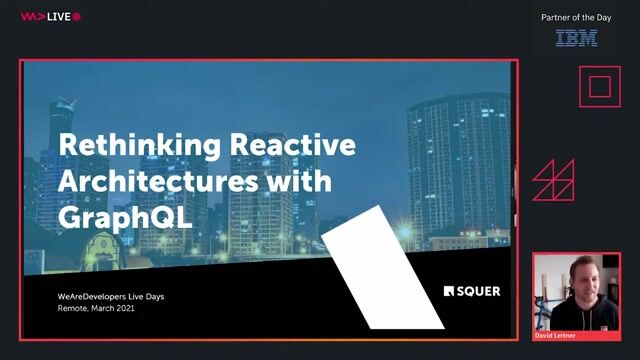
David Leitner
Rethinking Reactive Architectures with GraphQL
#1about 5 minutes
Defining reactivity through asynchronous data streams
Reactivity is explained as programming with asynchronous data streams, which are data containers existing in plural space and asynchronous time.
#2about 5 minutes
Making relationships between variables explicit and automatic
Reactive programming uses streams to bind variables together, ensuring that changes to one variable automatically propagate to dependent variables.
#3about 4 minutes
Shifting from pull-based to push-based UI design
A mail client example illustrates the shift from a manual, pull-based refresh model to a reactive, push-based model where the UI automatically updates.
#4about 8 minutes
Applying the four principles of the Reactive Manifesto
The Reactive Manifesto's goal of responsiveness is achieved through elasticity and resilience, which are both enabled by a message-driven architecture.
#5about 7 minutes
Tracing the evolution of microservice communication patterns
Microservice architectures evolved from synchronous pull-based communication to fully asynchronous, stream-centric, and event-sourced patterns for better resilience.
#6about 2 minutes
Using GraphQL subscriptions for end-to-end streaming
GraphQL subscriptions solve the final pull-based bottleneck between the client and backend, enabling a fully push-based, end-to-end reactive system.
#7about 4 minutes
Building a real-time collaborative insurance portal
A reactive architecture with GraphQL enables real-time synchronization between an insurance agent's and a customer's UIs for a seamless collaborative experience.
#8about 4 minutes
Achieving resilience in mobile banking with projections
Projections, or specialized read models hydrated from an event store, allow mobile banking apps to remain functional for key features even when backend services are down.
#9about 1 minute
Weighing the benefits and complexity of reactive systems
Reactive architectures offer powerful benefits like resilience and real-time capabilities but come at the cost of increased complexity, so they should be adopted carefully.
Related jobs
Jobs that call for the skills explored in this talk.


envelio
Köln, Germany
Remote
Senior
Python
Software Architecture
Matching moments
04:32 MIN
The key benefits of building reactive systems
The Rise of Reactive Microservices
01:32 MIN
Understanding the principles of reactive architecture
Architectures that we can use with .NET
02:07 MIN
Meeting modern application demands with the Reactive Manifesto
Is reactive the new black? Imperative vs. reactive programming with Quarkus
02:47 MIN
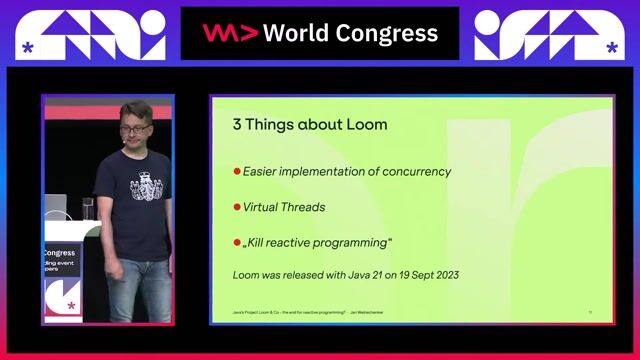
The core principles of reactive programming
Java's Project Loom & Co - the end for reactive programming?
05:37 MIN
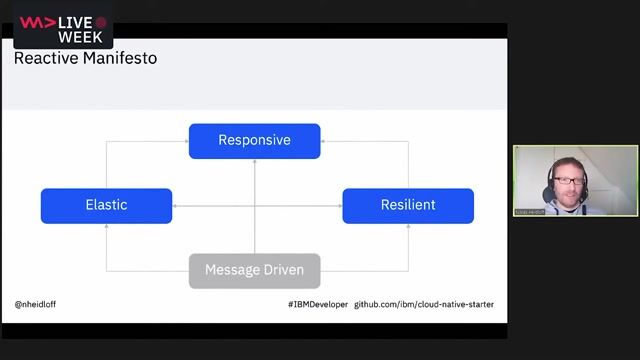
Understanding the core principles of the reactive manifesto
Side-by-Side: Reactive vs non-reactive Java
02:23 MIN
Core principles of the reactive manifesto
Development of reactive applications with Quarkus

03:03 MIN
An overview of the modern software architecture workshop
Mastering Modern Architecture - Oliver Sturm
03:21 MIN
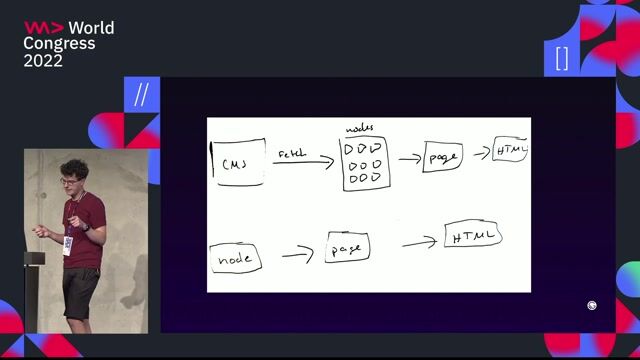
Exploring Gatsby's reactive, data-centric architecture
How Gatsby Cloud's real-time streaming architecture drives <5 second builds
Featured Partners
Related Videos
 46:24
46:24The Rise of Reactive Microservices
David Leitner
 39:10
39:10Development of reactive applications with Quarkus
Niklas Heidloff
 59:03
59:03Multiple Ships to the Island - Micro Frontends & Island Architectures
Florian Rappl
 34:28
34:28GraphQL Mesh – Why GraphQL between services is the worst idea and the best idea at the same time!
Uri Goldshtein
 28:12
28:12GraphQL: Does it replace SQL, REST or Something Else?
Gregor Bauer
 47:48
47:48Putting the Graph In GraphQL With The Neo4j GraphQL Library
William Lyon
 40:45
40:45GraphQL + Apollo + Next.js: A Lovely Trio
Josh Goldberg
 25:41
25:41Side-by-Side: Reactive vs non-reactive Java
Jan Weinschenker
Related Articles
View all articles



From learning to earning
Jobs that call for the skills explored in this talk.


PiNCAMP GmbH
Berlin, Germany
Senior
React
GraphQL
Next.js


&why GmbH
Berlin, Germany
€50-70K
Junior
Intermediate
Senior
React
Next.js
TypeScript


Adaptive Financial Consulting
Barcelona, Spain
CSS
HTML
RxJS
React
JavaScript
+1
Agixis
Villeurbanne, France
Senior
MVC
Java
JIRA
Azure
Scrum
+12
Staffworx Ltd
Kingston upon Hull, United Kingdom
Senior
API
GraphQL
ITproposal B.V.
Amsterdam, Netherlands
Remote
Senior
CSS
SASS
REST
Scrum
+5
Okeiro
Paris, France
Senior
Node.js
GraphQL
PostgreSQL
TypeScript
Microservices