
Stephen Cooper
A Practical Guide to Reducing Bundle Size
#1about 3 minutes
Why bundle size is important for user experience
Reducing bundle size leads to faster load times and a better user experience, which can also improve SEO rankings through better web vitals.
#2about 1 minute
Understanding tree shaking and dead code elimination
Tree shaking is a form of dead code elimination that removes unused code from the final bundle by analyzing the application's import graph.
#3about 4 minutes
Managing side effects to enable tree shaking
Bundlers avoid removing code with potential side effects, but you can use the `sideEffects: false` property in `package.json` to signal that unused imports are safe to drop.
#4about 2 minutes
Using pure annotations for advanced tree shaking
The `/*#__PURE__*/` annotation tells the bundler that a function call is side-effect-free, allowing it to be removed if its return value is unused.
#5about 3 minutes
How decorators and static properties break tree shaking
Code patterns like decorators and static class properties can create top-level references that prevent bundlers from identifying and removing unused code.
#6about 1 minute
Avoiding barrel files to improve tree shaking
Re-exporting modules from a single "barrel" file (`index.js`) can prevent tree shaking because it forces the bundler to evaluate all exports.
#7about 2 minutes
The importance of testing your bundle size
Small code changes can unexpectedly break tree shaking, so it's crucial to continuously test bundle size using tools like `size-limit` in your CI/CD pipeline.
#8about 1 minute
Debugging bundle size with source map explorer
When tests fail, tools like `source-map-explorer` and `sonder` help visualize the contents of your bundle to identify what code is being incorrectly included.
#9about 2 minutes
How class properties can prevent minification
Minifiers cannot shorten public or TypeScript-private class property names because they could be accessed externally, preserving their full string length in the bundle.
#10about 2 minutes
Using native private fields for better minification
Using native JavaScript private fields (with `#`) allows minifiers to safely mangle property names, but requires targeting modern ES versions to avoid polyfills.
#11about 4 minutes
Advanced patterns for optimizing minification
Further reduce bundle size by replacing verbose error messages with codes, passing class properties as function arguments, and inlining temporary variables.
#12about 1 minute
Comparing build tools and compression methods
The choice of build tool involves a trade-off between build speed and final bundle size, and selecting a modern compression algorithm like Brotli can provide additional savings.
Related jobs
Jobs that call for the skills explored in this talk.

tree-IT GmbH
Bad Neustadt an der Saale, Germany
€54-80K
Intermediate
Senior
Java
TypeScript
+1


Hubert Burda Media
München, Germany
€80-95K
Intermediate
Senior
JavaScript
Node.js
+1
Matching moments
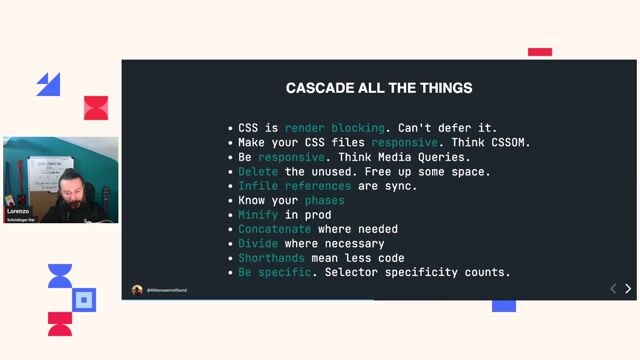
04:21 MIN
Reducing JavaScript's impact with smaller bundles
Sustainable me. A tale of good design.
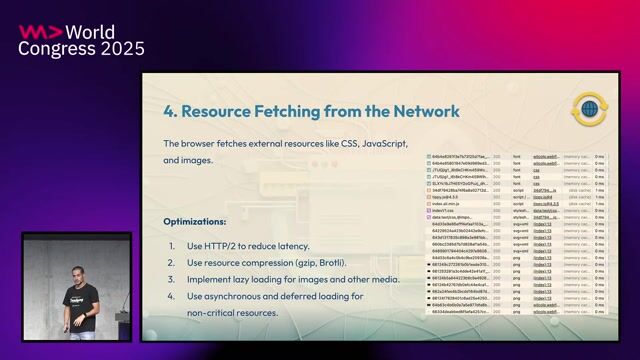
03:05 MIN
Executing JavaScript and optimizing the bundle
The Journey of a Pixel in a React Application
03:06 MIN
Reducing bundle size by replacing heavy dependencies
Challenges of building React and React Native apps
04:09 MIN
Shrinking asset size with modern formats and analysis
Sleek, Swift, and Sustainable: Optimizations every web developer should consider

01:57 MIN
The two primary approaches for improving frontend performance
To New Frontiers: The Future of Frontend Development

05:01 MIN
How production builds remain highly optimized
The Eternal Sunshine of the Zero Build Pipeline

01:39 MIN
How bundling reveals ESM's performance advantage
Oh CommonJS! Why are you mESMing with me?
04:17 MIN
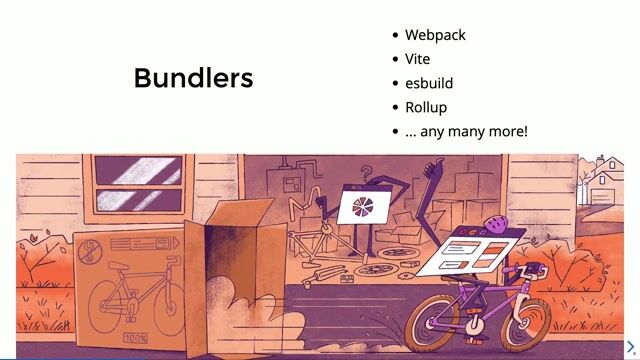
How bundlers work and why they are necessary
Tree Shaking the Bytes Away
Featured Partners
Related Videos
 27:40
27:40Tree Shaking the Bytes Away
Francesco Novy
 53:16
53:16How Your Bundle Size Affects The Climate
Roy Derks
 50:10
50:10The Eternal Sunshine of the Zero Build Pipeline
M4dz
 29:36
29:36Native Federation: The Future of Micro Frontends and Plugin-Systems in Angular
Manfred Steyer
 46:46
46:46The Lean Web
Chris Ferdinandi
 28:13
28:1310 must-know design patterns for JS Devs
Erick Wendel
 21:06
21:06The Dependency Cookbook - Recipes for Micro Frontend success
Lucas Braeschke & Stefan Bley
 50:28
50:28Angular tips/tricks you can use from tomorrow on
Benedikt Starzengruber
Related Articles
View all articles



From learning to earning
Jobs that call for the skills explored in this talk.


&why GmbH
Berlin, Germany
€50-70K
Junior
Intermediate
Senior
React
Next.js
TypeScript


PiNCAMP GmbH
Berlin, Germany
Senior
React
GraphQL
Next.js


RedTech Recruitment
Charing Cross, United Kingdom
Remote
CSS
D3.js
Redis
Node.js
+5
Brantner Digital Solutions
Charing Cross, United Kingdom
Remote
£45-65K
Senior
CSS
GIT
AJAX
+14
United Kingdom - 2 minutes ago
Intermediate
API
GIT
Azure
React
Python
+6