
Chris Ferdinandi
The Lean Web
#1about 5 minutes
The web is slow and fragile because of JavaScript
JavaScript's performance cost is orders of magnitude higher than HTML or CSS, leading to slow load times and brittle user experiences.
#2about 5 minutes
Understanding the hype cycle in web development
New technologies from large companies create a bandwagon effect driven by thought leadership and job descriptions, perpetuating a cycle of adoption.
#3about 5 minutes
Adopting a lean web approach with multi-page apps
The lean web prioritizes user needs over developer convenience by favoring multi-page applications built with static site generators over complex single-page apps.
#4about 2 minutes
Using service workers to enhance multi-page apps
Service workers act as a proxy between the browser and the network, enabling asset caching for instant page loads and offline functionality.
#5about 1 minute
Choosing micro-libraries over large frameworks
Instead of using large frameworks for small dynamic tasks, consider micro-libraries like Preact or petite-vue to reduce the JavaScript payload significantly.
#6about 4 minutes
Leveraging pre-compilers like Svelte and Astro
Pre-compilers such as Svelte and Astro convert component-based code into minimal vanilla JavaScript and HTML at build time, improving performance.
#7about 3 minutes
Relying on native browser features and the platform
Modern browsers offer native HTML and CSS solutions for common UI patterns like accordions and smooth scrolling, reducing the need for JavaScript.
#8about 1 minute
Recognizing the cyclical nature of web development trends
Web development moves in ten-year waves, from complex libraries to lightweight alternatives, eventually leading to platform adoption of the best ideas.
#9about 1 minute
The key takeaway is to ship less JavaScript
The most impactful way to improve web performance and resilience is to be more responsible and intentional about shipping as little JavaScript as possible.
#10about 4 minutes
Q&A on refactoring SPAs and page transitions
Discussion covers examples of companies moving from single-page apps to multi-page apps and the future of native browser APIs for page transition animations.
#11about 7 minutes
Q&A on web workers and native browser components
Web workers can offload tasks from the main thread to avoid blocking rendering, while native HTML components are a growing alternative to JavaScript-based UI.
#12about 8 minutes
Q&A on developer FOMO and framework standardization
The discussion addresses developer fear of missing out (FOMO) with a "just-in-time learning" strategy and weighs the benefits of framework standardization.
Related jobs
Jobs that call for the skills explored in this talk.

Hubert Burda Media
München, Germany
€80-95K
Intermediate
Senior
JavaScript
Node.js
+1

Matching moments
06:10 MIN
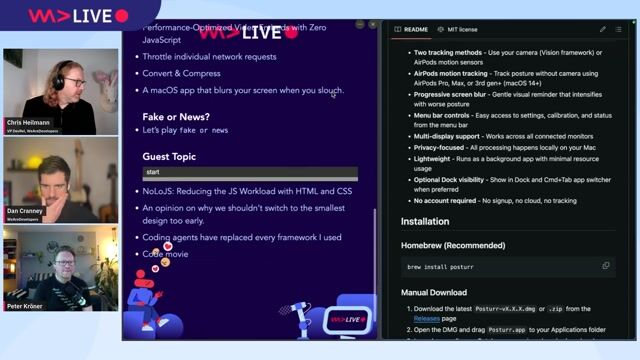
The ongoing debate for JavaScript-free web solutions
WeAreDevelopers LIVE – Keeping Up with Styles, Data & More

01:57 MIN
The two primary approaches for improving frontend performance
To New Frontiers: The Future of Frontend Development
02:44 MIN
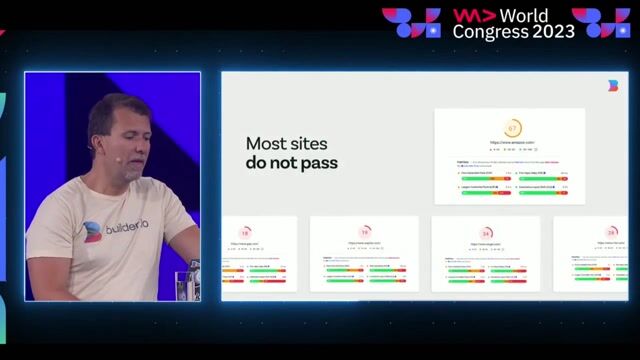
The performance problem with modern web applications
Qwik: Making sure that easy is same as performant

02:51 MIN
The rapid evolution of JavaScript and modern web APIs
The year 3000, a brief history of Web Development

05:07 MIN
The World Wide Web era of scalability and design
Closing Keynote by Joel Spolsky

03:22 MIN
Simplifying modern web development with a no-build approach
Fireside Chat with David Heinemeier Hansson
03:10 MIN
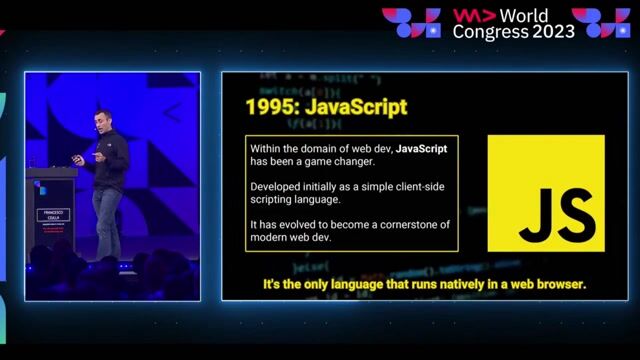
How JavaScript and its ecosystem shaped the web
From Punch Cards to AI-assisted Development

04:53 MIN
The four pillars of high-performance JavaScript
Things I learned while writing high-performance JavaScript applications
Featured Partners
Related Videos
 14:44
14:44Catching up on the basics you don't really need that much code
Chris Heilmann
 40:24
40:24Snappy UI needs no Single-Page Application
Clemens Helm
 30:42
30:42One Framework To Rule Them All: Faster Websites With Astro
Eddy Vinck
 43:11
43:11The State Of The Web
Jeremy Keith
 42:46
42:46The Naked Web Developer: Your Browser Is Your Framework
Avichay Eyal
 27:27
27:27Things I learned while writing high-performance JavaScript applications
Michele Riva
 32:56
32:56Web development: where are we, and where are we going?
Laurie Voss
 44:43
44:43Explore new web features before everyone else
Nikita Dubko
Related Articles
View all articles



From learning to earning
Jobs that call for the skills explored in this talk.


&why GmbH
Berlin, Germany
€50-70K
Junior
Intermediate
Senior
React
Next.js
TypeScript


PiNCAMP GmbH
Berlin, Germany
Senior
React
GraphQL
Next.js


Lightspeed
Ghent, Belgium
Remote
Senior
CSS
HTML
REST
React
+8