
Alexandra Waldherr
Getting Started with Machine Learning
#1about 3 minutes
The origins and evolution of machine learning
Machine learning evolved from modeling brain cells to powerful algorithms with the invention of backpropagation, large datasets like ImageNet, and the use of GPUs.
#2about 2 minutes
Core concepts of machine learning models
Machine learning is a subset of AI that uses statistics to find patterns, employing models like regression for numerical prediction and classification for assigning categories.
#3about 7 minutes
Building a model to predict CO2 emissions
A live coding demo shows how to use Pandas and Scikit-learn to train a random forest regressor on a Kaggle dataset for predicting vehicle CO2 emissions.
#4about 1 minute
Supervised, unsupervised, and reinforcement learning explained
The three main types of machine learning are explained, with reinforcement learning compared to getting a driver's license through environmental feedback.
#5about 3 minutes
Understanding deep neural networks and their challenges
Deep neural networks model the brain with layers and activation functions to handle complex data, but face challenges like overfitting, underfitting, and data bias.
#6about 5 minutes
Classifying images with noisy data using FastAI
This demo uses the FastAI framework to build an image classifier, demonstrating how to handle noisy data from web scrapes and interpret a confusion matrix.
#7about 1 minute
A look at advanced neural network architectures
An overview of specialized architectures includes Recurrent Neural Networks (RNNs) for sequential data, Transformers for language, and Autoencoders for data compression.
#8about 2 minutes
Applying machine learning in the automotive industry
Machine learning is used in the automotive sector for image segmentation in autonomous driving, predictive maintenance, and processing various sensor data.
#9about 2 minutes
The future of ML in quantum computing and biology
Exciting new applications for machine learning include optimizing quantum circuits with TensorFlow Quantum and predicting protein structures with AlphaFold.
#10about 5 minutes
Q&A on model reliability and explainable AI
The discussion addresses how to provide guarantees for model performance in the real world and the critical need for explainable AI to understand model failures.
#11about 9 minutes
Q&A on data, privacy, and model selection
This Q&A covers strategies for collecting diverse datasets, the impact of privacy regulations like GDPR, and how to choose the right model for a given task.
Related jobs
Jobs that call for the skills explored in this talk.


Wilken GmbH
Ulm, Germany
Senior
Amazon Web Services (AWS)
Kubernetes
+1
Matching moments
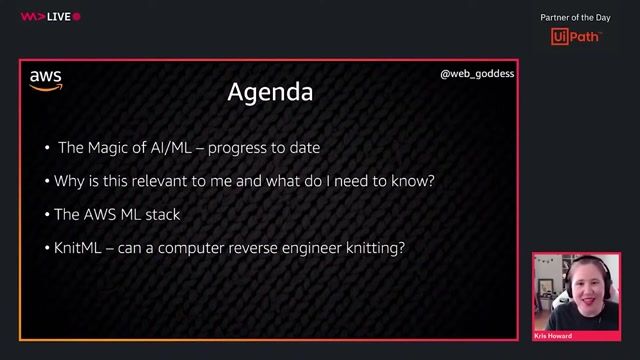
05:05 MIN
Inspiring real-world applications of AI and machine learning
Machine Learning for Software Developers (and Knitters)

02:29 MIN
A personal journey with AI technology
The Software Engineer 2030: From Coder To AI Orchestrator? - Patrick Schnell
01:54 MIN
Real-world applications and key takeaways
Machine learning 101: Where to begin?

05:32 MIN
Tracing a 20-year journey through AI's evolution
Google Gemma and Open Source AI Models - Clement Farabet
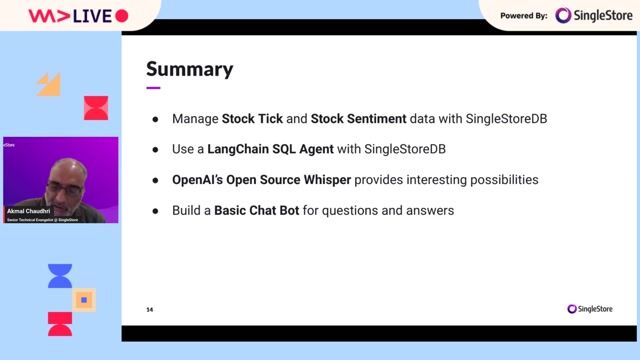
10:29 MIN
Exploring the future of AI in FinTech
OpenAI for FinTech: Building a Stock Market Advisor Chatbot

02:11 MIN
Global expansion and AI-powered learning platforms
Behind the Scenes: Putting HR and Tech on the Same Stage

02:20 MIN
The evolving role of the machine learning engineer
AI in the Open and in Browsers - Tarek Ziadé
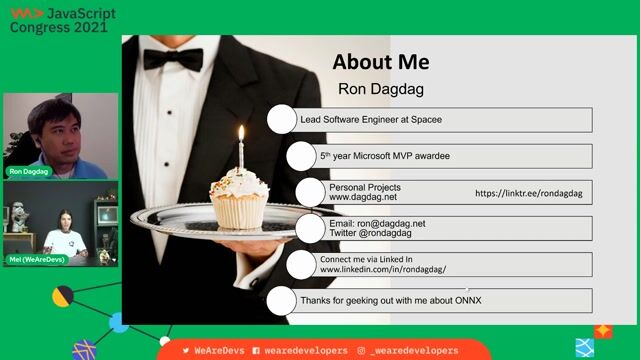
08:20 MIN
Q&A on starting a career in machine learning
Making neural networks portable with ONNX
Featured Partners
Related Videos
 57:46
57:46Overview of Machine Learning in Python
Adrian Schmitt
 26:55
26:55How Machine Learning is turning the Automotive Industry upside down
Jan Zawadzki
 58:06
58:06From Syntax to Singularity: AI’s Impact on Developer Roles
Anna Fritsch-Weninger
 27:23
27:23From ML to LLM: On-device AI in the Browser
Nico Martin
 49:45
49:45Machine Learning for Software Developers (and Knitters)
Kris Howard
 56:55
56:55Multimodal Generative AI Demystified
Ekaterina Sirazitdinova
 49:57
49:57MLOps and AI Driven Development
Natalie Pistunovich
 38:24
38:24Machine learning in the browser with TensorFlowjs
Håkan Silfvernagel
Related Articles
View all articles



From learning to earning
Jobs that call for the skills explored in this talk.


WeCloudData
Remote
Python
Machine Learning
Continuous Integration
Descriptiona Venture-backed Deep-tech
Charing Cross, United Kingdom
ETL
Python
Docker
PyTorch
Machine Learning
The BBC
Glasgow, United Kingdom
£10-48K
Junior
Pandas
Tableau
SAP HANA
Data analysis
+1
RedTech Recruitment
Cambridge, United Kingdom
£64-86K
Senior
Python
PyTorch
Machine Learning
Olive Jar Digital
Cambridge, United Kingdom
£90-120K
Junior
Python
Matlab
Data analysis
Machine Learning
Ai Education
Remote
£70-75K
Python
Machine Learning
Natural Language Processing
ASFOTEC
Canton de Lille-6, France
Intermediate
NoSQL
Kafka
DevOps
Python
Pandas
+11