Rainer Hahnekamp
To New Frontiers: The Future of Frontend Development
#1about 4 minutes
The history of frontend frameworks and the rise of the big three
A look at the evolution from early libraries like jQuery to the stable dominance of Angular, React, and Vue in modern web development.
#2about 2 minutes
The two primary approaches for improving frontend performance
New frameworks aim to improve speed by either running faster with compiled tooling or running less by reducing JavaScript bundle sizes.
#3about 5 minutes
Using a compiler approach to reduce framework code
Frameworks like Svelte and Solid act as compilers during build time to generate optimized code, removing the need for a large runtime in the browser.
#4about 4 minutes
Advanced hydration strategies for reducing application code
Server-side rendering combined with techniques like just-in-time hydration and partial hydration for interactive components can significantly reduce the client-side JavaScript bundle.
#5about 4 minutes
How Remix reduces bundle size with server-side data fetching
Remix executes data fetching in a server-side loader function, which keeps data-related dependencies and logic off the client and reduces the final bundle size.
#6about 4 minutes
Contrasting developer interest with actual framework usage statistics
While new frameworks generate excitement, download statistics show the continued dominance of React, Angular, and Vue, which are likely to adopt new successful patterns over time.
#7about 2 minutes
Q&A on compiler adoption and the move to full-stack
Answering audience questions about whether the big three frameworks can adopt a compiler approach, the future of Svelte, and the trend towards full-stack development.
Related jobs
Jobs that call for the skills explored in this talk.

Hubert Burda Media
München, Germany
€80-95K
Intermediate
Senior
JavaScript
Node.js
+1

Matching moments
13:10 MIN
Audience Q&A on practical micro-frontend challenges
Micro-frontends anti-patterns

11:10 MIN
The only frontend stack that truly matters
WeAreDevelopers LIVE – Frontend Inspirations, Web Standards and more
02:41 MIN
The expanding universe of JavaScript and WebAssembly
How to Stop Choosing JavaScript Frameworks and Start Living
01:22 MIN
How SPAs came to dominate frontend development
Snappy UI needs no Single-Page Application
05:42 MIN
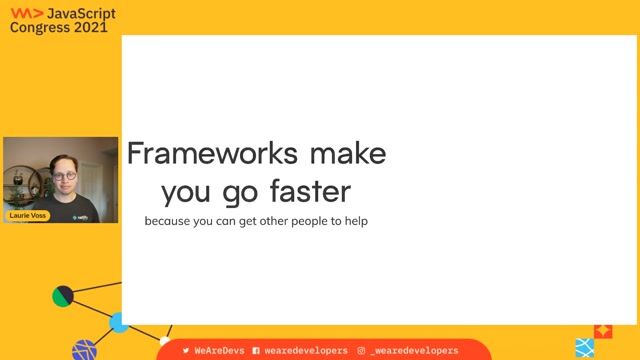
A detailed breakdown of modern web frameworks
Web development best practices in 2021
11:32 MIN
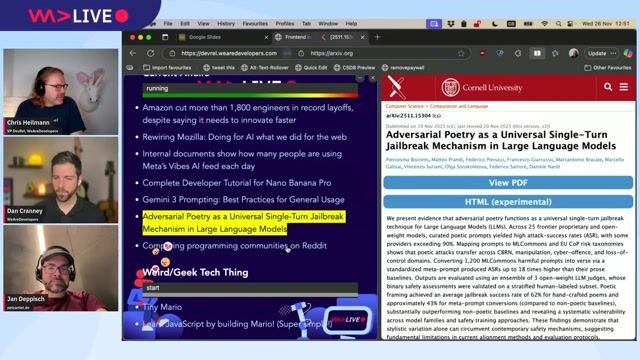
The industry's focus on frameworks over web fundamentals
WeAreDevelopers LIVE – Frontend Inspirations, Web Standards and more
02:51 MIN
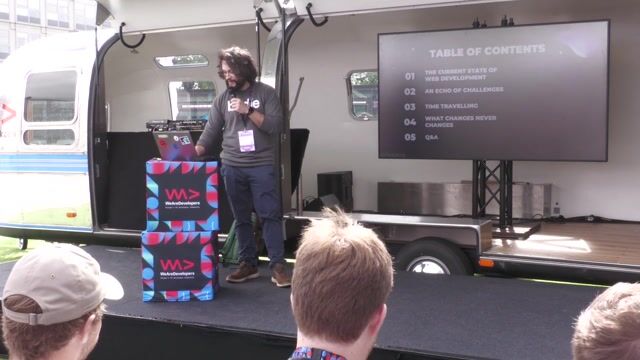
The rapid evolution of JavaScript and modern web APIs
The year 3000, a brief history of Web Development
06:10 MIN
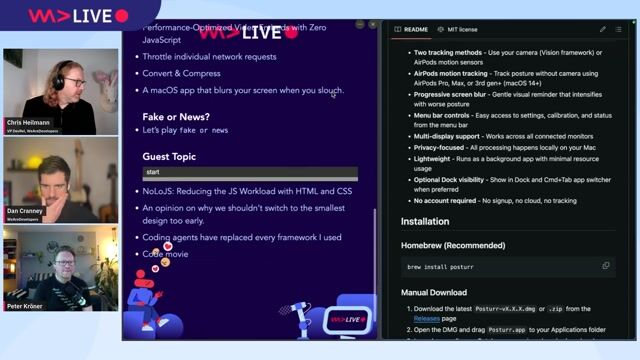
The ongoing debate for JavaScript-free web solutions
WeAreDevelopers LIVE – Keeping Up with Styles, Data & More
Featured Partners
Related Videos
 30:40
30:40What the heck do "declarative" and "reactive" actually mean?
André Kovac
 31:21
31:21Why I Recommend Svelte to Every New Web Developer
Markus Hatvan
 51:10
51:10Web development best practices in 2021
Laurie Voss
 32:56
32:56Web development: where are we, and where are we going?
Laurie Voss
 50:10
50:10The Eternal Sunshine of the Zero Build Pipeline
M4dz
 43:20
43:20Microfrontends at Scale
Josh Goldberg
 59:03
59:03Multiple Ships to the Island - Micro Frontends & Island Architectures
Florian Rappl
 35:17
35:17Front-End Micro Apps
Serg Hospodarets
Related Articles
View all articles



From learning to earning
Jobs that call for the skills explored in this talk.


&why GmbH
Berlin, Germany
€50-70K
Junior
Intermediate
Senior
React
Next.js
TypeScript


BPCS Consulting Services GmbH
München, Germany
€70-85K
Intermediate
React
Vue.js
TypeScript


PiNCAMP GmbH
Berlin, Germany
Senior
React
GraphQL
Next.js


Lightspeed
Ghent, Belgium
Remote
Senior
CSS
HTML
REST
React
+8
Scheer GmbH
Saarbrücken, Germany
Intermediate
API
CSS
HTML
React
Routing
+2
KA RESOURCES
Mannheim, Germany
€65K
GIT
React
WebPack
JavaScript
+1
Westhouse Consulting GmbH
Frankfurt am Main, Germany
Junior
JIRA
SASS
Scrum
React
DevOps
+6
SPM Sportplatz Media GmbH
Hamburg, Germany
PHP
API
Vue.js
Docker
Laravel
+1