
Florian Rappl
Stairway to Heaven - Scaling Frontends the Right Way
#1about 6 minutes
Understanding the purpose and benefits of micro-frontends
Micro-frontends are a software trend that enables scaling by splitting a large application into smaller parts developed by independent, agile teams.
#2about 2 minutes
Exploring the challenges and downsides of micro-frontends
Adopting micro-frontends can lead to challenges like increased bundle sizes, browser version mismatches, and the operational overhead of managing npm packages.
#3about 4 minutes
Introducing the modular monolith as a practical alternative
The modular monolith, managed within a monorepo, offers a balanced approach by ensuring version consistency and simplifying code sharing across the application.
#4about 6 minutes
Using Nx to manage and scale a frontend monorepo
The Nx toolset helps manage monorepos by visualizing dependencies and enforcing architectural boundaries between different domains using configurable linting rules.
#5about 7 minutes
A practical demonstration of an Nx workspace
This live demo showcases key Nx features, including generating a dependency graph, defining a library's public API, and enforcing domain boundaries with linting.
#6about 4 minutes
A strategic library structure for scaling applications
Organize monorepo libraries into distinct categories like feature, UI, domain, and utility to improve clarity and enforce strict access rules between layers.
#7about 2 minutes
Combining monorepos with micro-frontends for the best results
A hybrid approach uses a monorepo to develop isolated micro-frontends, gaining benefits like shared versioning and faster builds while maintaining deployment independence.
#8about 9 minutes
Q&A on monorepo processes and common challenges
The Q&A session addresses practical concerns such as coordinating package updates, assigning ownership of shared libraries, and managing circular dependencies.
Related jobs
Jobs that call for the skills explored in this talk.

Hubert Burda Media
München, Germany
€80-95K
Intermediate
Senior
JavaScript
Node.js
+1

Matching moments
05:24 MIN
The role of micro-frontends in scaling development teams
Micro-Frontends with Module Federation: Beyond the Basics
04:25 MIN
The challenge of building scalable frontend applications
Typescript, React and Atomic Design - a match made in heaven
04:54 MIN
Q&A on backend, git structure, and micro frontends
Generate Customer Journeys from reusable Building Blocks

02:25 MIN
Considering alternatives to micro frontends
Advanced Micro Frontends: Multi-Version and Multi-Framework Scenarios
13:10 MIN
Audience Q&A on practical micro-frontend challenges
Micro-frontends anti-patterns
04:34 MIN
Conclusion and key takeaways on micro frontends
Micro Frontends with Module Federation: Why and How?

06:11 MIN
Tracing the architectural evolution to microfrontends
Microfrontends with Blazor: Welcome to the Party!
02:15 MIN
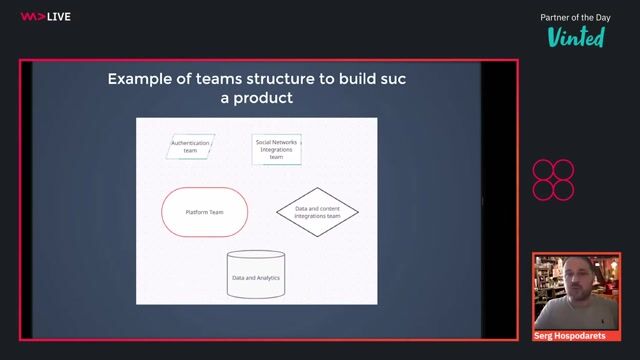
The architectural evolution from monoliths to micro-frontends
Front-End Micro Apps
Featured Partners
Related Videos
 45:40
45:40Micro Frontends with Module Federation: Why and How?
Manfred Steyer
 43:20
43:20Microfrontends at Scale
Josh Goldberg
 41:49
41:49Destructuring Frontend monoliths with MicroFrontends
Trishul Goel
 44:35
44:35Micro-Frontends with Module Federation: Beyond the Basics
Manfred Steyer
 35:17
35:17Front-End Micro Apps
Serg Hospodarets
 28:05
28:05Independently together: how micro-applications improve developer experience + app performance
Bilal Cinarli
 40:17
40:17Micro-frontends anti-patterns
Luca Mezzalira
 45:39
45:39Nx - the easy choice
Miroslav Jonas
Related Articles
View all articles



From learning to earning
Jobs that call for the skills explored in this talk.


&why GmbH
Berlin, Germany
€50-70K
Junior
Intermediate
Senior
React
Next.js
TypeScript


PiNCAMP GmbH
Berlin, Germany
Senior
React
GraphQL
Next.js


BPCS Consulting Services GmbH
München, Germany
€70-85K
Intermediate
React
Vue.js
TypeScript


Krell Consulting & Training
Senior
GIT
NestJS
Docker
Node.js
Angular
+6