
Sani Yusuf
Differential Loading
#1about 3 minutes
An overview of the Angular framework for enterprise development
Angular is a mature, open-source framework with strong enterprise support, TypeScript integration, and a powerful CLI for best practices.
#2about 8 minutes
Key Angular features for building robust applications
Angular provides built-in tools for managing environment variables, component inheritance, HTTP interceptors, and lazy loading for better performance.
#3about 4 minutes
Understanding the performance cost of supporting older browsers
Supporting a wide range of browsers often requires large polyfills, which increases the application payload and slows down load times for users on modern browsers.
#4about 7 minutes
How differential loading serves different browser builds
Angular's differential loading creates two builds and uses the `type="module"` and `nomodule` script attributes to automatically serve a lightweight version to modern browsers.
#5about 3 minutes
Applying differential loading in a real-world healthcare setting
In healthcare, differential loading improved user experience by reducing load times for the majority of users on modern browsers while still supporting legacy systems.
#6about 3 minutes
Discussing the future of Angular and its enterprise adoption
Angular is expected to remain a key enterprise framework due to its stability and long-term support, making it a safe bet for large-scale applications.
#7about 4 minutes
Testing and implementing differential loading builds
Differential loading generates two builds from a single codebase, and testing should focus on application logic rather than the polyfills themselves.
#8about 4 minutes
How differential loading identifies browser capabilities
The mechanism relies on the browser's native support for `type="module"` and `nomodule` attributes, not user-agent sniffing, to determine which build to load.
#9about 3 minutes
The long-term future of polyfills and loading strategies
As browsers evolve, the need for polyfills will change, but new web APIs will likely continue to create a need for conditional loading strategies.
Related jobs
Jobs that call for the skills explored in this talk.


Hubert Burda Media
München, Germany
€80-95K
Intermediate
Senior
JavaScript
Node.js
+1

Matching moments
05:27 MIN
Improving performance with differential loading
Angular Features You Should be Using
04:30 MIN
Understanding Angular as a complete development platform
Angular <> Angular CDK - Awesomeness Combined

01:57 MIN
The two primary approaches for improving frontend performance
To New Frontiers: The Future of Frontend Development
02:02 MIN
Understanding Angular's foundation and role at Google
State of Angular

11:10 MIN
A brief history of JavaScript frameworks
How to Stop Choosing JavaScript Frameworks and Start Living

07:08 MIN
Answering questions on advanced Angular topics
Angular Features You Should be Using
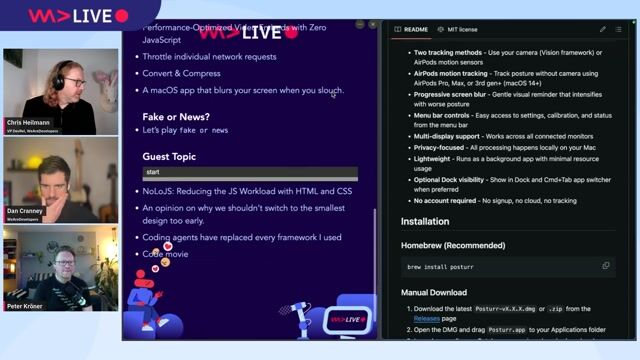
06:10 MIN
The ongoing debate for JavaScript-free web solutions
WeAreDevelopers LIVE – Keeping Up with Styles, Data & More
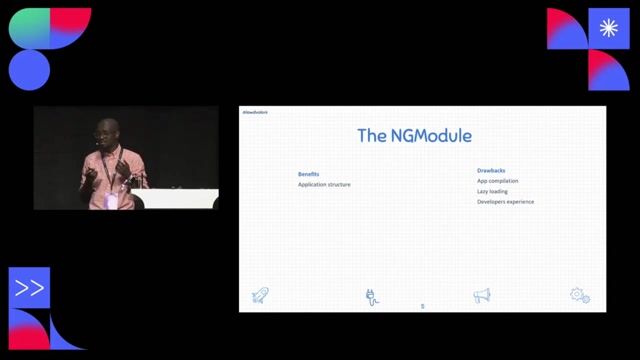
02:52 MIN
Understanding the history and limitations of NgModules
Stand alone components in Angular
Featured Partners
Related Videos
 36:22
36:22Angular Features You Should be Using
Sani Yusuf
 28:56
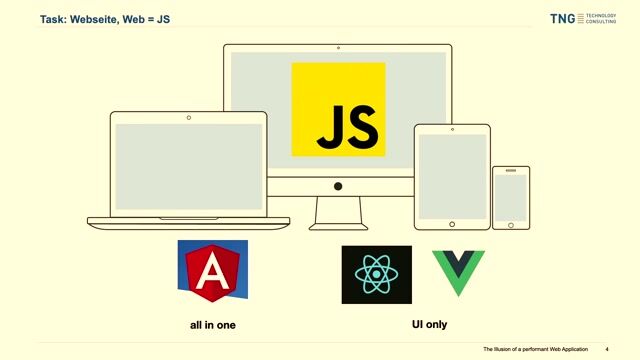
28:56The Illusion of a Performant Web Application
Cathrin Möller
 50:28
50:28Angular tips/tricks you can use from tomorrow on
Benedikt Starzengruber
 41:34
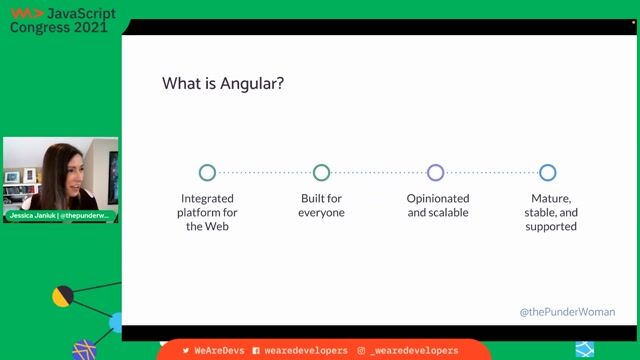
41:34State of Angular
Jessica Janiuk
 29:11
29:11Angular Magical directives
Valentine Awe
 33:18
33:18The Microfrontend Revolution- Using Webpack 5 Module Federation with Angular
Manfred Steyer
 58:56
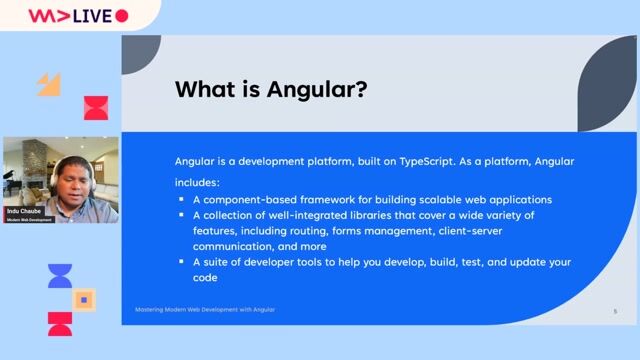
58:56Angular Unleashed: Mastering Modern Web Development with Angular
Indu Chaube
 43:08
43:08On tour with heroes == Moving from Angular to WebComponents
Benjamin Glusa
Related Articles
View all articles



From learning to earning
Jobs that call for the skills explored in this talk.


BEKO Engineering & Informatik GmbH
Remote
€60K
.NET
Azure
Angular
+1