Manfred Steyer
The Microfrontend Revolution- Using Webpack 5 Module Federation with Angular
#1about 4 minutes
The historical challenge of building micro frontends
Micro frontends break large applications into smaller, independently deployable parts, but loading them into a unified shell has historically been difficult.
#2about 5 minutes
Understanding Webpack 5 Module Federation concepts
Module Federation enables loading separately compiled code at runtime by defining host and remote roles, exposing modules, and sharing common dependencies.
#3about 4 minutes
Using custom builders to integrate with Angular CLI
A custom Angular CLI builder is required to inject the Module Federation configuration into the underlying Webpack build process.
#4about 6 minutes
Demo: Setting up the project for Module Federation
The demonstration begins by addressing the Webpack 5 requirement in an Angular 11 project using a Yarn resolution and then adding the necessary plugin.
#5about 4 minutes
Demo: Configuring the remote micro frontend application
The remote application's Webpack config is adjusted to expose specific Angular modules and define shared dependencies to avoid duplication.
#6about 4 minutes
Demo: Configuring the host shell for lazy loading
The shell application is configured to map the remote micro frontend and uses a standard lazy-loaded route to import it at runtime.
#7about 3 minutes
Demo: Running and verifying the micro frontend integration
The shell and micro frontend are served simultaneously, demonstrating successful runtime loading and dependency sharing as verified in the browser's network tab.
#8about 2 minutes
Understanding the roadmap for production use
While Webpack 5 is production-ready, official Angular CLI integration is expected in version 12, making the current approach an experimental opt-in for prototyping.
#9about 2 minutes
Key takeaways and resources for further learning
Module Federation is a key enabler for micro frontends and plugin-based architectures, providing a straightforward way to load separately compiled code.
Related jobs
Jobs that call for the skills explored in this talk.


Hubert Burda Media
München, Germany
€80-95K
Intermediate
Senior
JavaScript
Node.js
+1
Matching moments
04:47 MIN
Using Webpack 5 Module Federation for micro-frontends
Front-End Micro Apps
05:28 MIN
How Module Federation enables runtime integration
Micro Frontends with Module Federation: Why and How?
02:57 MIN
Integrating micro frontends with module federation
Advanced Micro Frontends: Multi-Version and Multi-Framework Scenarios
05:24 MIN
The role of micro-frontends in scaling development teams
Micro-Frontends with Module Federation: Beyond the Basics
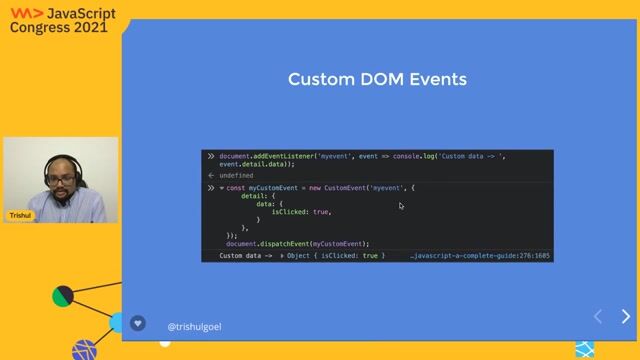
05:07 MIN
Using Webpack 5 Module Federation for implementation
Destructuring Frontend monoliths with MicroFrontends
08:25 MIN
Loading micro-frontends with dynamic federation
Micro-Frontends with Module Federation: Beyond the Basics
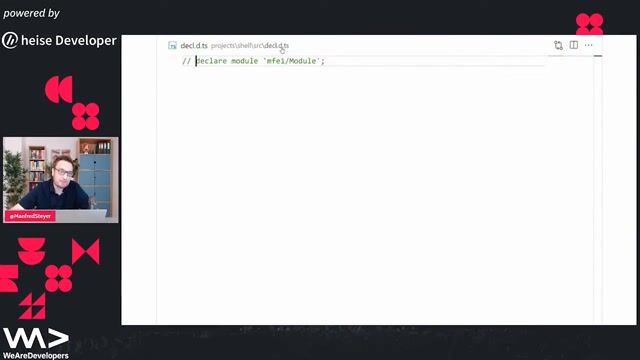
04:08 MIN
Implementing dynamic federation at runtime
Micro Frontends with Module Federation: Why and How?
04:41 MIN
The evolution from Webpack to bundler-agnostic federation
Native Federation: The Future of Micro Frontends and Plugin-Systems in Angular
Featured Partners
Related Videos
 45:40
45:40Micro Frontends with Module Federation: Why and How?
Manfred Steyer
 35:17
35:17Front-End Micro Apps
Serg Hospodarets
 44:35
44:35Micro-Frontends with Module Federation: Beyond the Basics
Manfred Steyer
 29:36
29:36Native Federation: The Future of Micro Frontends and Plugin-Systems in Angular
Manfred Steyer
 43:08
43:08On tour with heroes == Moving from Angular to WebComponents
Benjamin Glusa
 36:22
36:22Angular Features You Should be Using
Sani Yusuf
 24:47
24:47Advanced Micro Frontends: Multi-Version and Multi-Framework Scenarios
Manfred Steyer
 41:49
41:49Destructuring Frontend monoliths with MicroFrontends
Trishul Goel
Related Articles
View all articles



From learning to earning
Jobs that call for the skills explored in this talk.


&why GmbH
Berlin, Germany
€50-70K
Junior
Intermediate
Senior
React
Next.js
TypeScript


Vesterling Consulting GmbH
Nürnberg, Germany
Remote
€50-75K
API
CSS
GIT
+7
Vesterling Consulting GmbH
Nürnberg, Germany
Remote
€50-75K
API
CSS
GIT
+6
Weidmüller GmbH & Co KG
Marktheidenfeld, Germany
Go
API
C++
Scrum
DevOps
+4